Today, the need to safeguard the assets, lives, and sensitive information of businesses entails more than just the use of lock and key systems. Access Control Systems Installation has become a vital part of a strong security setup in the digital age with features like biometric authentication, remote access, and tracking of entry and exit in real-time.
In this extensive guide, we will explain to you the ins and outs of Access Control Systems Installation for businesses in 2026 covering nearly every aspect from planning and technology choice to implementation and maintenance.
Basic Concepts of Access Control Systems
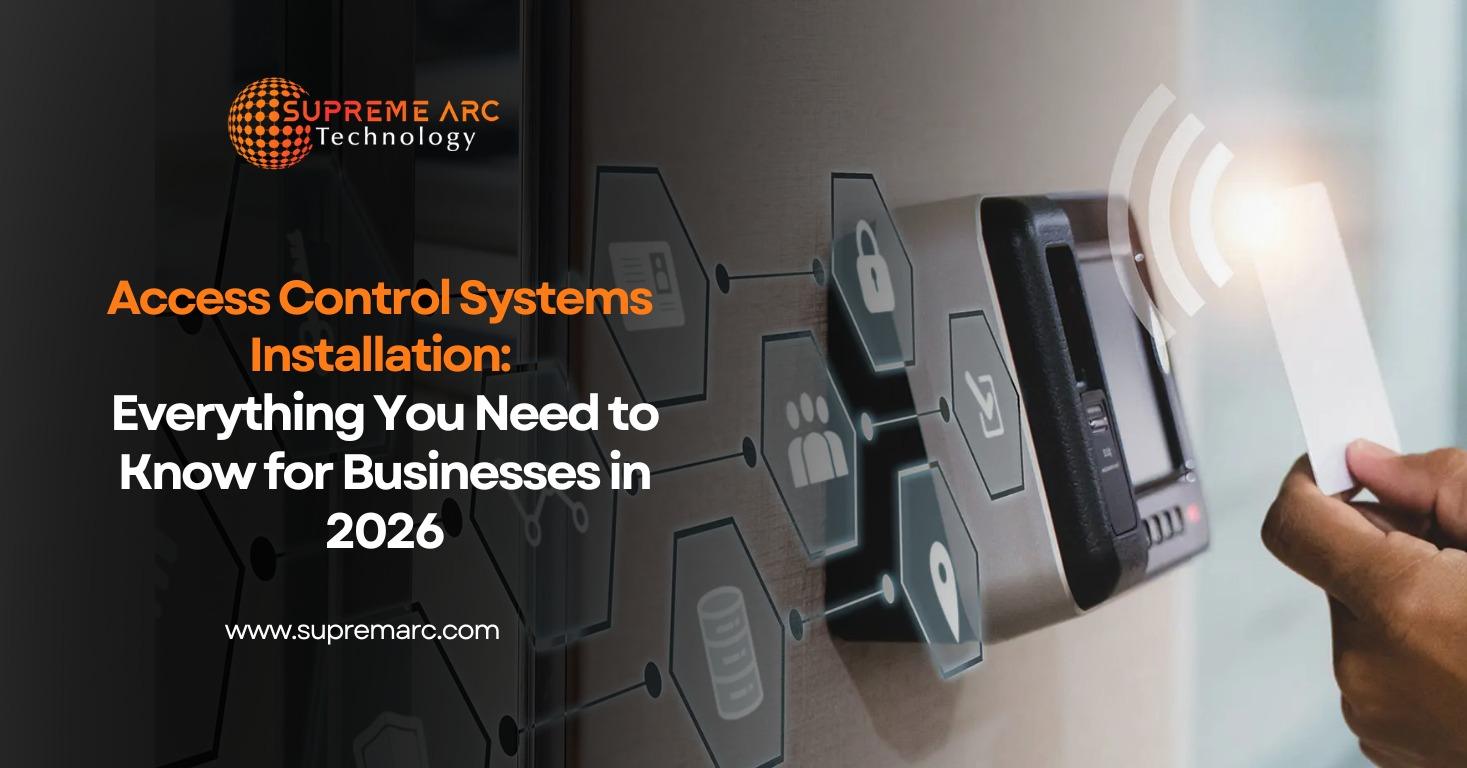
Access Control Systems are designed with the purpose to control and monitor the access of individuals to various locations within a building. These systems either replace or supplement the conventional methods of security by using technologies such as RFID cards, biometric identification devices, PIN codes, and smartphones.
Besides improving security, these systems offer:
- Tracking and logging during access
- Customizing who gets access to which area at what time
- Interoperation with other security tools
The Importance of Access Control Systems Installation in 2026
Due to the growing risks of security breaches and the proliferation of smart offices, companies simply cannot rely on the old ways of security anymore. A good access control system can bring you these main advantages:
1. Enhancement of Security
Present-day solutions layer their security using varying factors of authentication manufacturing access control that only facilitates the appraised individuals being granted access.
2. Single Point of Administration
From a dashboard, activity on still permissions may be controlled by the adopters even through multiple locations pairing it.
3. Real-Time Supervision
Access records may be reviewed at any time so as to be used in audits and after security breaches.
4. Growing with You
If you ever want to add more users or expand to new locations, the system will be able to handle it without difficulty.
5. Rules and Responsibilities
There is an opportunity to show all the details that were kept to conform to the yearning of regulations as well as to maintain the accountability within the org.
Types of Access Control Systems
Don’t rush in on the implementation without first knowing the type of business system initiation access control that you need. Thus this section shows different access control paradigms:
1. Discretionary Access Control (DAC)
This approach enables resource owners to decide on access.
2. Mandatory Access Control (MAC)
Access is not made available to anyone except as laid down in strict policies.
3. Role-Based Access Control (RBAC)
The user’s access options are decided according to their organizational position.
4. Biometric Access Control
Authentication methods such as fingerprint, face, and iris recognition that are highly secure.
5. RFID and Card-Based Systems
Employees use cards or key fobs to gain access quickly and efficiently.
Step-by-Step Guide to Access Control Systems Installation
Step 1: Assess Your Security Needs
To begin with, you can carry out the assessment of your premises:
- Entry/exit points count
- Areas with highly sensitive that need to be restricted
- User number
- The extent to which integration is required (CCTV, alarms, etc.)
Choosing a system that best fits your business operations will be facilitated by a good assessment.
Step 2: Choose the Right Technology
Your picking has to be based on your needs:
- Small office: Keycard or PIN system
- Medium business: RFID with central management
- High-security: Biometric or multi-factor authentication
Step 3: Plan the System Design
You have to draw the map as detailed as possible when planning the layout of the installation:
- Doors and points of access
- Controllers location
- Network infrastructure
- Power supply and backup systems
The main purpose of careful planning is to avoid installation errors and even potential maintenance issues.
Step 4: Install Hardware Components
This refers to:
- Door readers (RFID, biometric, keypad)
- Electronic locks and magnetic locks
- Control panels
- Exit buttons and sensors
It is very important to ensure that all hardware components are installed using the manufacturer’s instructions to get the best results.
Step 5: Software Configuration
Hardware installation completed, the software can be set up by:
- Creating user profiles and specifying different levels of access
- Setting up different rules for time-based access
- Integrating with current systems (CCTV, HR software)
- Allowing remote access
Step 6: Testing and Calibration
You do not want to take the system live before:
- Trying all the doors and verifying the access rights
- Checking how the system reacts and the time it takes to respond
- Ensuring that backup arrangements are in place and operational
Step 7: Training and Deployment
Prepare your staff for:
- Getting the hang of cards or biometrics
- Being able to configure and reconfigure permissions
- Responding in case of an emergency
Operational smoothness and minimizing errors are ensured through proper training.
Key Features to Look for in 2026
Think below mentioned technologically equipped top features while establishing an Access Control System:
- Cloud-Based Management: From anytime and anywhere to control your system
- Mobile Credentials: Your mobile phone can be used instead of card
- AI Integration: Access pattern tracking and alarms & alerts
- Touchless Entry: The convenience of no contact with the door or technology
- Integration Capabilities: Your other systems too to be linked
Common Challenges and How to Overcome Them
1. Installation Complexity
By partnering with experienced professionals, the installation will proceed smoothly and properly.
2. System Integration Issues
Choose systems that support open APIs and standard protocols to facilitate integrations with other systems.
3. User Resistance
One way to overcome resistance is to prepare users through training and show them just how easy the system is.
4. Maintenance Costs
A reliable and scalable system reduces your maintenance stint in the future.
Best Practices for Successful Installation
- Following a detailed site survey
- High-quality hardware and software
- Proper network security
- Continuous updating of system firmware and software
- Scheduled maintenance checkups
Future Trends in Access Control Systems
The ongoing development of access control systems to smarter and more user-friendly ones opens new horizons in 2026. Some trends are listed below:
- AI-based security
- More precise facial recognition tech
- IoT device connecting
- Cloud-native security platforms
- Models with zero-trust security
For sure these developments will keep on prompting businesses to adjust their security and access management strategies.
Final Thoughts
Access Control Systems Installation is the very foundation of a safe and competitive business in 2026. Besides safeguarding your assets physically and employees’ safety, choosing proper security measures can be of a high value for your entire organization’s structure security wise. By basing your decisions on your specific needs, finding a technology that suits them, and following an organized implementation approach, you may put in place a system that will be both efficient and ready for the future.
We at Supreme Arc pose a team dedicated to developing advanced Access Control Systems that exactly fit your business security needs while providing scalability and peace of mind to our valued customers.
If you intend to renew your security framework, the time is now to make for a changing business scenario the purchase of a modern access control system that is fit for your growing business.