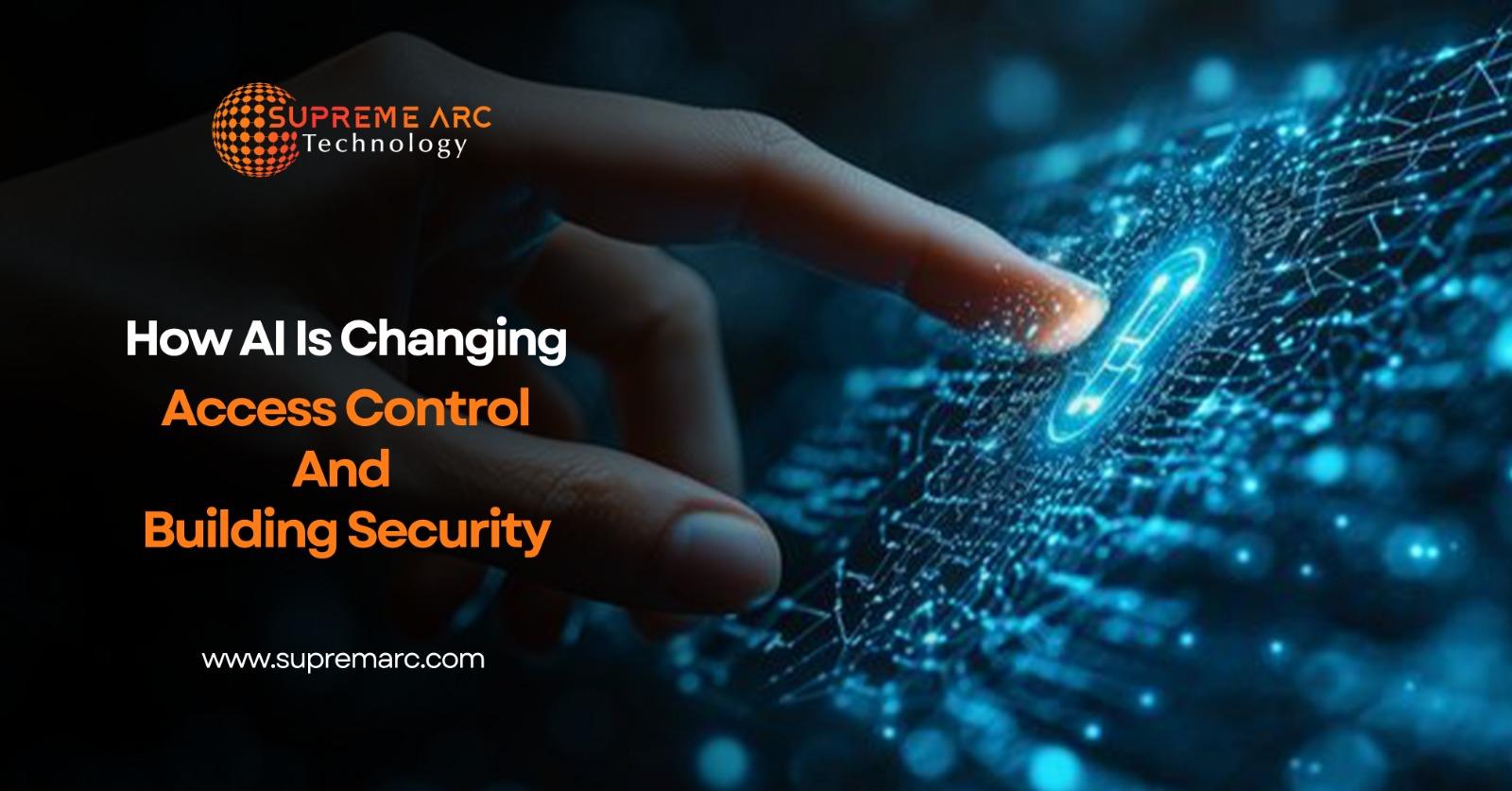
Today, security systems don’t just include locks, keys, and isolated surveillance cameras anymore. As a result of AI, companies and institutions are turning to smart, flexible technologies capable of generously protecting human resources, tangible property, and the very infrastructure itself. In fact, a Modern Access Control System nowadays extends way beyond just control of the flow of people, it is all about thoughtful decision making, forecasting security, and even providing flawless user experience.
Supreme Arc is leading the way in these changes, offering state-of-the-art AI Access Control System solutions that are revolutionizing building safety not only in the UAE, Saudi Arabia, and other regions, but the entire world.
The Evolution of Access Control Systems
In the past, access control systems involved basic means of authentication, for example, PIN codes, access cards, or key fobs. However, as times change, so do systems, and the old-fashioned access control devices are vulnerable to:
- Being stolen or copied
- Complete absence of real-time monitoring
- Little or no usage of data
- Not being able to adjust to changing security threats
Modern AI-powered Access Control Systems overcome these drawbacks by using machine learning, facial recognition, behavioral analytics, and cloud-based management in a unified manner.
What Is an AI Access Control System?
An AI Access Control System harnesses artificial intelligence to interpret information like a human, notice patterns, and decide what action should be taken at once. To go beyond simple credential verification, AI-operated systems possess the capability to:
- Recognize someone by their biometrics (face, fingerprint, iris)
- Spot suspicious behavior or anomalies
- Remember user patterns and recognize when to change access rules
- Work side by side with other intelligent building tech
This radical change has access control not only being a security measure but becoming a security ecosystem based on intelligence and activity.
Major Ways AI Is Impacting Building Security
1. Facial Recognition and Biometric Authentication
Incorporating AI into facial recognition is a game-changer as it effectively does away with entry or access cards. Staff as well as authorized visitors can get access after undergoing a quick face scan or other identity check.
Among the advantages are:
- Being contactless and therefore much more hygienic
- The credential loss or theft risks are practically eliminated
- Entry is quicker, leading to better user satisfaction
Already, biometrics and other advanced authentication methods have become central to any worthwhile Modern Access Control System, even essential in the case of high-level security areas.
2. Real-Time Threat Detection
AI software runs an unceasing loop of reviewing all access points and interpreting whether people’s actions follow a normal pattern. The moment a deviation from normal is detected say at attempt to break-in or unauthorized access at odd times it can:
- Sound the alarm
- Block certain areas
- Send immediate alert to security personnel
This method of security is much better because it is orientated towards minimizing the consequences instead of just reacting after the fact.
3. Predictive Security and Analytics
Predictive analytics is one of the greatest abilities of any AI-driven Access Control System. Historical data is a treasure trove that AI mines for:
- Uncovering possible security threats
- Recognizing busiest times for access
- Suggesting modifications to security protocols
As an illustration, the system could respond to a suspicious pattern of accesses to a particular location prior to the breach occurring by recommending that the security be intensified or that it be closely monitored.
4. Integration with Smart Building Systems
Thanks to the cloud, AI-controlled access systems can now be easily linked with:
- Closed-circuit television (CCTV) screening
- Fire alarms / safety systems
- Heating, Ventilation, and Air Conditioning (HVAC) and light controls
- Visitor tracking systems
This way, all the elements of security cooperate without any boundaries calling each other to keep the alert intact. It can be referred to as a security ecosystem. One of the many examples is a case when the system can identify a person entering and roll up the lights or give that man access to certain parts based on the role he plays.
5. Remote Access and Cloud-Based Control
Administrators of modern systems can operate access from a remote location using cloud-based platforms. This feature is extremely handy for companies with multiple locations.
Among major benefits:
- Live monitoring from any location
- Immediate granting or revoking of access permissions
- Centralized administration of multiple facilities
With AI, a Modern Access Control System becomes a flexible and scalable option for a business that is growing.
6. Behavioral Analytics
It is possible for AI to just not stop at identifying people. In fact, it can go on to figure out:
- The usual times when someone comes in and leaves
- Most often visited parts of the building
- Trajectories or routes, most commonly followed, inside a building
If the recorded data shows any kind of anomalous activity, like a person suddenly accessing a restricted area or following an erratic path, the system will intervene without delay.
Benefits of AI in Access Control Systems
Enhanced Security
By reducing human error and having continuous monitoring, AI offers a significantly higher level of safety.
Improved Efficiency
By opening access to self-service, administrational staff get more time as security officers’ help becomes less frequent. The efficiency also increases as operations are streamlined.
Better User Experience
People like coming to work with face scanning, or scanning their hands or eyes. No one likes standing in lines.
Data-Driven Insights
Organizations can monitor who is entering and at what times, patterns that they can use to proactively target the risks and threat situations before they happen.
Scalability
AI-enabled systems not only easily handle a growing number of users but they also are definitely able to support expansion of your buildings and other infrastructure components.
Use Cases Across Industries
Corporate Offices
Implementing AI-based access controls in corporate settings will ensure the security of physical spaces and the ease of entry of the workspace while also providing employee attendance tracking and onsite movement history.
Airports and Transportation Hubs
Facial recognition and real-time threat detection technologies will greatly enhance security at airports and other high-traffic transportation locations.
Healthcare Facilities
In addition to offering visitors the ability to enter the premises without waiting, hospitals can also use AI to restrict access to very sensitive areas such as medical records, laboratories, and drug storage facilities.
Warehouses and Industrial Sites
And this could even be integrated with other systems to guarantee that only authorized individuals are able to access critical areas.
Residential Buildings
Residences in gated communities or in high rise developments can be given a safer environment as well as the convenience of smart access through the use of intelligent security systems.
Challenges and Considerations
Even as there are many advantages to AI, there are, however, the following challenges that may be part of the considerations for the organization:
- Privacy of data: Legal compliance to personal data regulation is a necessity.
- Integration: Functionality with existing systems is significant.
- Initial Investment: Compared to the older systems, the new one will cost more at the outset.
- Cybersecurity: It is important to keep AI systems secure from digital threats.
With the assistance of a team like Supreme Arc, organizations are assured to bypass the pitfalls that may accompany the introduction of AI technologies to their business premises.
Why Choose Supreme Arc for AI Access Control Solutions?
Supreme Arc offers a comprehensive range of AI Access Control System services meeting minimum level requirements of a modern business. Our professionals:
- Will design your unique system and package it for implementation
- Allow you to use your current existing security system through integration
- Make sure that the solution is scalable and takes into account future developments right from the outset
- Provide ongoing support and are always at hand for maintenance
We steer businesses through the process of leaving behind the old methods and adopting intelligent, AI security platforms that guarantee not only efficiency, but also top level security.
The Future of Access Control
AI is definitely here to stay and it is already the future of securing buildings. With the march of technology, we are going to see:
- More secure biometric authentication methods
- Greater use of IoT devices
- Self-operating security systems
- More sophisticated forecasting features
AI Modern Access Control Systems will be recognized as a must-have for any society wanting to ensure that they stay safe in a world that is increasingly becoming complex.
Final Thoughts
Incorporating AI into access control systems changes the whole concept behind building security. From implementing AI to perform facial recognition to using it to predict and prevent breaches , an AI Access Control System is a system that is faster, better, safer, and more economical for managing access.
Companies that decide to implement these changes now will be the ones best prepared for the challenges of security in the future while they will likewise increase the efficiency of their business and the satisfaction of their users.
Supreme Arc’s mission is to give organizations the support they need to accept and foster the change through solutions that are innovation-driven, trust-worthy, and extensible for the modern age.