Author name: supadminmain

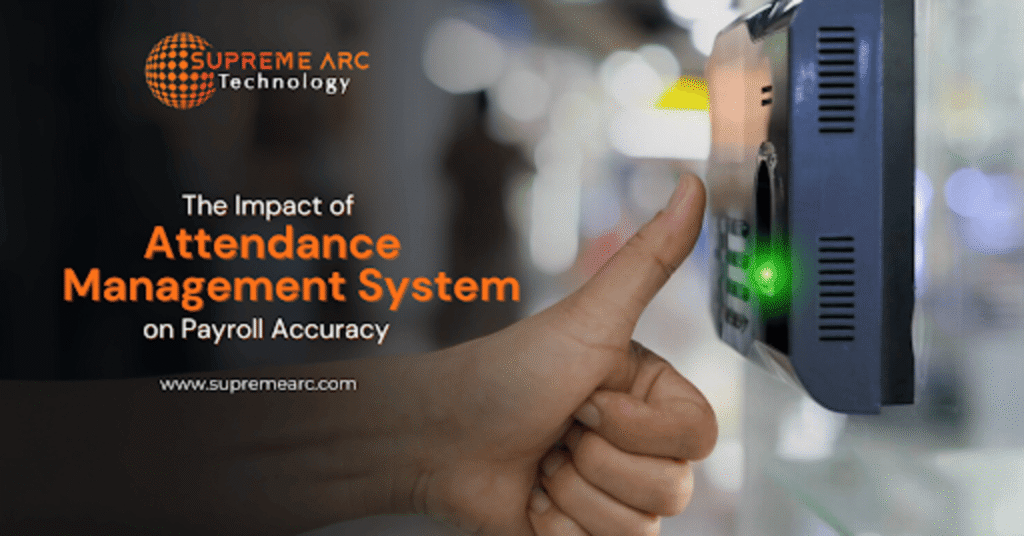
The Impact of Attendance Management Systems on Payroll Accuracy
Default

The Impact of Attendance Management Systems on Payroll Accuracy

No matter the size of a company, employees are the backbone of growth. They sacrifice their time, skills, and energy daily and so, in return, they expect to be paid a fair and accurate amount on time without any delays. Payroll is not only a money cycle, it is definitely a symbol of trust between an employer and their team. Nevertheless, efforts to maintain payroll accuracy have been a major challenge which organizations have had to deal with. The conventional ways of recording attendance that include the use of manual registers, spreadsheets, or even outdated punch cards have by default errors, delays, and frustration as their consequences. For HR departments this implies a very time consuming job of endless rectifications while at the same time employees may face discouragement and lack of trust. Attendance management systems along with other innovative access control solutions plug this gap perfectly. These businesses who have decided to automate employee attendance tracking process and link it directly to the payroll backend are the ones who can offer salaries that are calculated accurately, visibly and with fast turnover time. We at Supreme Arc have been instrumental in the region in the transformation of conventional attendance tracking into remote attendance tracking using face recognition solutions for not only security but also payroll management. Today, we will talk about the impact of the attendance system for employees on payroll accuracy, why it is necessary for present day businesses, and the benefits gained by companies after the implementation. Why Payroll Accuracy is Non Negotiable Just think of an employee going beyond his required working hours in a week with a lot of activities and then not finding his overtime pay when the money is usually transferred to his account. Or imagine that due to faulty attendance data, someone’s salary is not transferred to his account on time. Not only are these situations small errors, they also affect motivation, morale, and dedication of the staff. Payroll mistakes can cause: – Disappointment and lack of satisfaction among staff – Reduction of the trust level between staff and management – Legal problems resulted by labor law violations – More work for the HR department Inaccurate payroll is not only a financial problem, it is a staff morale problem as well. That is the reason why the businesses are using attendance systems for their employees so that there is no room for an error. The Traditional Challenges in Attendance and Payroll Most businesses had major problems with attendance tracking before they decided to automate their system. These are, – Manual Errors: Data entry mistakes while completing timesheets or spreadsheets. – Buddy Punching: Employees clocking in on behalf of absent colleagues. – Paper Based Records: These records are at risk of being lost, damaged, or even manipulated. – Delayed Updates: Payroll teams are given attendance data late which is the reason behind the delay in payroll. – Limited Transparency: Employees who cannot view their own attendance or leave balances. The gaps in these areas were directly linked to payroll errors. And when accuracy gets compromised, employee satisfaction is affected too. How Access Control Based Attendance Systems Solve These Problems Attendance systems of the new era, particularly those merged with access control, have become radical the way companies oversee the hours of work. Consequently, they achieve the following: 1. Automated Time Tracking – The process of attendance is carried out on the spot through the use of biometric devices, RFID cards, or mobile apps. 2. Data that cannot be manipulated – The usage of biometrics in verification is one that makes it impossible for someone to be giving your hand to do the clock in for you. 3. Effortless Payroll Integration – The system of attendance management is in direct connection with payroll software. 4. Correct Calculations of Overtime and Leave – every additional hour, shift, or holiday is calculated with great accuracy. 5. Transparency for Employees  – Employees have access to their attendance records, leave balances and overtime logs. The Impact on Payroll Accuracy Payroll Accuracy through Attendance Management by implementing an attendance system, companies see: Real World Impact: A Quick Case Example Let’s consider a medium sized construction company with 200 employees. Before implementing  an attendance management system in the company , payroll processing was chaotic and difficult . Supervisors submitted manual paper timesheets, and HR would spend hours poring over them to catch errors, and employees often complained about missing overtime pay. Everything changed when Supreme Arc team installed an access control based attendance management system, the results were immediate: – Overtime and shift hours were captured automatically, errors disappeared – Payroll processing became 50% faster. – Employee complaints about pay discrepancies nearly disappeared. – HR finally had time to focus on strategic initiatives instead of correcting attendance sheets. Key Benefits of Attendance Management Systems for Payroll Here are the main benefits for companies: 1. Fair and Transparent Salaries 2. Increased Employee Trust 3. Lowered HR Operations Workload 4. Saving of Money 5. Following Labor Regulations 6. Expandability Choosing the Right Attendance System for Employees Not all attendance solutions are the same. Here are key factors businesses should look for: – Payroll Integration – Biometric Security – User friendly Interface – Expandability – Customer Care And Support At Supreme Arc, we design the solutions that are a perfect match for these requirements. The result is not only stable access control but also payroll that is more accurate and intelligent. Conclusion Employee trust is the core of the Payroll system. If the payroll system is snagging, the trust that the employees have in you will be broken and thus they will lose their workplace efficiency. Nevertheless, if you are able to do it right consistently , you will have a workforce that is energized, content, and loyal to you. Access control powered attendance management system is a fair bridge that connects work hours with a fair pay. The system will not only guarantee the correctness of the data but also will promote
Access Control System Supplier
Default

How to Choose the Right Access Control System Supplier: Key Factors to Consider

Nowadays, security is not something to be considered, it is a necessity. The safety, compliance, and the serenity of mind of you or your corporate office, residential community, warehouse, school, or healthcare facility are maintained at a very low level if you don’t have a proper way to manage the access to the premises. This is the point where an Access Control System supplier comes in. But in fact, choosing the right supplier is not as easy as taking the first one you come across when you make a search online. Your supplier is not merely delivering you the equipment; they are supporting you to protect your most valuable assets, the people, and the areas. The right decision can make you hours of troubles, money, and security risks while the wrong one. Well, that can make you pay much more than just your investment. Then, how can you select the right partner? It would be great to take the steps one by one to understand it. Understand Your Security Needs First Right before you go off and Google the “best Access Control System Supplier,” it is necessary that you know exactly what you need. A good supplier will be the one to ask you these questions prior to giving you a solution. If they get to the “latest gadget” straightaway without understanding your security goals, then you are being handed a red flag. Make a list of your security priorities and challenges. The clearer you are, the easier it is for the supplier to match you with the right system.  Check Their Industry Experience Experience is very important when it comes to security. Not all the suppliers have the same knowledge or skills. So, those who are involved in small offices only will be very different from the ones who are able to manage large corporate or industrial kinds of work. Some suppliers may have developed their skills in very strict places such as government buildings, hospitals, or hotels, each of which has specific security requirements. The right supplier must be able to understand and communicate with you. They should be familiar with your way of working, able to foresee the problems you will encounter, and provide solutions that are suitable for your organization and not just general systems. Prior to making a choice, let them respond to these inquiries: Professional suppliers offer more than products; they identify problems before they arise, understand local compliances, and can suggest the most suitable technology available for your industry.  Look at the Range of Solutions They Offer Choose a supplier who offers flexible options, not a one size fits all system.With fast changing tech like cloud access, mobile entry, AI insights, and touchless solutions, look for: Easy integration with your current systems Hardware variety (biometrics, RFID, smart locks, turnstiles) Scalable, user-friendly software Evaluate the Quality of the Hardware The top of the line access control system is useless if the hardware is faulty. Your supplier should use proven brands which are reliable and also provide detailed info on durability, warranty, and support.  Ask:  – Are the devices designed for use outdoors? – What is the warranty term?  -Is equipment certified by security industry standards?  Poor quality readers or locks which in turn may cause failures  in the most serious of cases security violations.  Prioritize After-Sales Support and Maintenance Give maintenance and post-purchase assistance top priority.  Setting up an access control system is just the beginning of the process. Updates, hardware replacements, troubleshooting, and occasionally urgent repairs are all necessary for systems. A good supplier is more than just a one-time installer; they are a long-term partner. Your supplier should, -provide 24/7 assistance or at the very least a prompt response window. -notify you of software upgrades and updates. A good supplier is more than just a one-time installer; they are a long-term partner. Ask About Integration with Other Systems Integration is crucial in today’s security environment. The following should be compatible with your access control:  -CCTV systems -Alarm systems -Software for managing visitors -Monitoring attendance and building management systems You can save money and streamline operations by selecting a supplier who can integrate your security ecosystem.  Check Their Reputation and Reviews You can find out a lot about a supplier online before you ever meet them.  Examine: – Google reviews – Recommendations on LinkedIn – Case studies and customer endorsements on their website Take note of how people characterise working with them—are they proactive, professional, and responsive? Don’t just focus on the quantity of positive reviews.  Compare Pricing, But Don’t Just Choose the Cheapest When it comes to security, “cheap” can prove to be far more expensive in the long run. A low cost vendor might overlook essential components, offer poor customer service, use low grade equipment, or lack proper software.  Instead of cut off focusing on the pricing: Focus on the overall worth you are getting. Confirm whether the upkeep, instruction, and set up are included. Do business with suppliers who practice full disclosure on every cost. Remember, security measures are investments that protect your people and your property, not just purchases.  Look for a Supplier Who Thinks Like a Partner The best suppliers don’t just sell and forget , they establish a bond with you. They invest time learning about your business, planning for its growth, and ensuring you get value from your system.  Characteristics of a good partner include: – They don’t advocate for a purchase, but rather inform you of all available options – Their proposed solutions always focus on your business, not their quota  – They continue to advise you well after everything is set up and operational. Conclusion Selecting the correct supplier is paramount to making a security investment. The security controls envisioned by the supplier will determine the safety of your premises, the efficiency of access management, and the adaptability of your system to your future needs.  In summary:  – Understand your needs  – Get a supplier with experience  – Insist on high quality equipment and

Security Features to Look for in Modern Access Control Systems
Default

Security Features to Look for in Modern Access Control Systems

In the fast-evolving security landscape of the new age, organizations must install cutting-edge Access Control Systems (ACS) to defend their assets, employees, and data. Next-generation ACS solutions provide numerous features for enhanced security, streamlined processes, and flexibility for modifications to various organizational demands. This article reveals the best security features for the selection of a new-age Access Control System. 1. Multi-Factor Authentication (MFA) MFA secures through the fact that the user has to generate a sequence of proofs of verification prior to accessing. It can be something the user knows (password), something the user has (access card), and something the user is (biometric identification). Suprema’s BioStation 3 is an example, incorporating facial recognition, fingerprint recognition, and mobile credentials for proper authentication processes. 2. Biometric Integration Biometric solutions are more secure through the use of personal physiological characteristics for verification. Spectra’s FaceScribe Plus offers advanced facial recognition, and fingerprint readers ensure reliable and effective identification. Biometric solutions reduce the possibility of unauthorized access through lost or stolen credentials. 3. Scalability and Flexibility As companies grow, their security systems grow with them. Spectra’s TwinXs 3S RAC has two doors, four reader capacity and the expansion capability as required. Its modularity as well as multiple protocols communication feature make it a perfect fit for firms anticipating growth. 4. Extensive Audit Trails and Reporting Detailed audit event logs are useful for forensic review and regulatory compliance. Spectra access control systems have detailed audit trails that include user dates of access, points of entry, and attempted intrusions. They can be exported in multiple formats, allowing analysis and reporting to be easy. 5. Third-Party System Integration The modern ACS must be readily integrated with other security and management systems. Mairs Turnstile turnstiles, for example, such as PT400 and LX400 full-height turnstiles, have third-party device support, which includes RFID readers, facial recognition cameras, and QR code readers. Such integration supports a common security infrastructure. 6. Remote Management and Monitoring Remote centralized monitoring and access control system management contribute to operational effectiveness. The CMID Manager V2 software from CMI Tech allows administrators to view device status, event access, and user administration via a central console, making it easier to quickly react to security violations. 7. Anti-Tailgating and Anti-Passback Features Anti-tailgating and anti-misuse of credentials protection must be ensured to prevent unauthorized entry. Anti-passback features in Spectra’s access control systems prevent the user from entering when he has exited, except when he re-authenticates upon return. Other than this, Mairs Turnistle’s full height gates are designed in a manner to prevent tailgating and unauthorized entry. 8. Emergency Response Integration Under emergency situations, immediate and synchronized response is of utmost relevance. Spectra systems may be integrated with fire alarm systems in a manner that the doors will automatically open for evacuation needs. Mairs Turnstile gates can be programmed to open on emergency messages so that free evacuation can be made available. Revolutionary Security Feature of Modern Access Control Systems Seamless Integration with Existing Infrastructure Modern access control systems have to offer seamless integration into a pre-existing infrastructure of an organization. Spectra access control solutions are designed on the basis of this flexibility and integrate flawlessly with a wide variety of third-party systems such as CCTV, fire alarm, and elevator control. Integration offers one security platform the facility of centrally controlling and offering simple-to-implement operations. Advanced Biometric Authentication Biometric verification provides an added layer of protection by verifying individuals through distinctive physiological characteristics. CMI Tech’s EF-45 iris scanner is one such product that provides rapid, touchless identification, accuracy, and ease of use. Paired with their CMID Manager V2 software, firms can assign access levels and track entry histories so they can be safer. Enhanced Physical Access Barriers Physical barriers also play a significant role in access control for the purpose of denying unapproved entry and crowd traffic control. Mairs Turnstile provides different turnstile solutions, such as the Full Height Turnstile PT Series, with different features such as anti-tailgating and anti-climbing to prevent unauthorized entry. The turnstiles can be combined with different types of authentication like RFID cards, QR codes, and biometric scanners to address different security demands. Customizable and Scalable Solutions As businesses grow, the security needs change. One needs scalable and configurable access control systems. Spectra’s TwinXs 3S – RAC controller can support four doors and can be configured as master, slave, or standalone, providing flexibility in different deployment situations. The controller has a compact design and large storage, which is suitable for businesses of all sizes so that security arrangements are able to catch up with organizational expansion. Conclusion Accurate Access Control System selection is performed through comparison of features to meet your company’s security requirements and business function. Keeping multi-factor authentication, biometric integration, scalability, robust reporting, third-party integration, remote management, anti-tailgating, and emergency response as top priorities, companies can establish a robust and responsive security configuration. Ready to Secure Your Security Setup? At Supremarc, we offer custom access control solutions that integrate with your current infrastructure and grow with your own needs. Contact us at info@supremarc.com and discover how we can assist in securing your organization.  

Asset Tracking
Default

Top 5 Reasons Why Every Business Needs an Asset Tracking System in 2025

The current business environment is dynamic and therefore requires efficient asset management. Having the latest Asset Tracking System, i.e., systems based on RFID technology, can prove to be of great worth towards greater security and operational efficiency. The following are the top five reasons why any business organization should have an Asset Tracking System in 2025: 1. Real-Time Visibility and Control New Generation Asset Tracking Systems provide real-time visibility of the location and status of the assets. Real-time visibility reduces the risk of theft or loss and optimizes asset utilization. For instance, Supreme Arc Technology provides RFID, IoT sensor, and BLE-based asset tracking solutions to industries 2. Improved Operational Efficiency Asset tracking is also automated, reducing human error and freeing up employee time. RFID Asset Tracking allows organizations to track inventory automatically, schedule maintenance automatically, and capture compliance reporting. Supreme Arc Technology systems are designed to integrate with existing business processes and enhance overall productivity. 3. Scalability for Growing Businesses As businesses expand, so does their asset management requirement. Flexible Asset Tracking Systems are capable of expansion with expanding inventories and numbers of locations. Supreme Arc Technology solutions are highly flexible, hence even small or complex businesses may still operate their assets. 4. Compliance and Reporting Upgrade Asset tracking must be accurate to facilitate financial reporting and regulatory compliance. The RFID-based solutions enable thorough accounting of asset use and movement and easy auditing and industry compliance. Supreme Arc Technology solutions offer configurable reporting to address a variety of compliance needs. 5. Cost Savings and ROI Investment in an Asset Tracking System provides unmatched cost benefit in the form of asset loss avoidance, maintenance interval maximization, and resource utilization maximization. Such efficiencies provide gigantic return on investment over the long term. Supreme Arc Technology clients have attained huge asset utilization and cost improvement.  Integration with Current Infrastructure Next-generation Asset Tracking Systems are architecture-independent and modular to be integrated into a company’s existing architecture. This presents companies with the possibility of having high-level tracking features without incurring changes to existing systems. RFID-based solutions from Supreme Arc Technology, for instance, are pre-integrated to be used in combination with various enterprise resource planning (ERP) systems, with real-time synchronization of data and tracking of assets. The integrating factor in addition to process automation also includes higher information consistency among departments. Greater Security and Loss Prevention RFID Asset Tracking Systems protect an organization to a great extent. With real-time visibility of assets’ locations, they make the systems unimaginable to steal or divert assets. Geofencing and real-time alerts feature by Supreme Arc Technology solutions makes any abnormality in asset movement easily identifiable and correctible in time. These are very important controls in safeguarding valuable assets and minimizing losses. Data-Driven Decision Making The wealth of data generated by Asset Tracking Systems empowers businesses to make informed decisions. Detailed analytics on asset utilization, maintenance schedules, and lifecycle management enable companies to optimize resource allocation and forecast future needs accurately. Supreme Arc Technology’s platforms provide comprehensive dashboards and reporting tools, facilitating strategic planning and operational efficiency. Final Thoughts – Asset Tracking System Implementing a robust Asset Tracking System is no longer a luxury but a necessity for businesses aiming to stay competitive in 2025. By leveraging RFID technology and scalable solutions, companies can achieve greater visibility, efficiency, and control over their assets. Ready to Transform Your Asset Management? Contact us at info@supremarc.com to learn more about how our Asset Tracking Systems can benefit your business.

Enhancing Security in Hotels and Hospitality with 2-Door Controllers
Default

Enhancing Security in Hotels and Hospitality with 2-Door Controllers

Convenient access in the guise of guest security is the ultimate achievable goal in the hospitality sector. Already deployed access control systems such as 2-door and 4-door controllers afford hotels the flexibility and protection to watch multiple entry points without a strain. Maximize the Guest Experience with Seamless Access Guests today want ease and convenience. Having the latest access control systems can go a long way in remaking the guest experience with little or no waiting time and easy entry. For instance, facial recognition technology like CMI Tech’s NOVAFACE-2N makes easy and key/card-less touchless access to the rooms possible. These technologies enhance not just operational efficiency, but also enhance the stay to be made more secure and more personalized to the guests. Versatile Access Control Solutions Hotels require adaptable systems which will support numerous points of entry, ranging from the  bedrooms to secure staff zones. Suprema’s CoreStation 20 is a 2-door premium controller with a capacity of up to 500,000 users and the finest choice for enormous hotel installations. Coupled with Suprema’s BioStar 2 platform, it offers the highest management efficiency and scalability. For applications where a strong but space-saving solution is needed, Spectra’s TwinXs 2C offers hardened control of two doors in a low footprint, with easy setup and serviceability. 4-Door Controllers with Capability As more hotels are developed, more access control is needed. Suprema’s Door Module allows for secure control of four doors with encrypted communication and third-party reader support for design convenience. Spectra TwinXs 3S is another suitable solution, which includes a high-capacity processor and an appropriate storage capacity to manage simultaneous accesses in the hotel complex in a suitable manner. Integration of Biometric Solutions Other security biometric devices can be integrated. CMI Tech NOVAFACE-2N is a high-throughput face recognition terminal access control, which permits only the concerned persons to pass through sensitive areas. Complementary Turnstile Solutions To more effectively manage the movement of individuals, especially where lobbies or secure spaces are involved, turnstile use can be helpful. Mairs Turnstile offers a range of options, including the MT-S306 access control turnstile, which is widely recognized for reliability and customized design to address both the functional and design requirements of modern hotels. Customizable Access Control for Diverse Hotel Environments Hotels are very heterogeneous with respect to room setup and equipment, e.g., guest rooms and executive suites, conference rooms, and leisure spaces. Access control systems requiring flexible installation and configuration are required in such heterogeneous environments. Suprema’s CoreStation 20 is one such flexible configuration product where access permission can be provided by hotels to specific zones and user groups. Flexibility offers the ideal level of security to each section of the hotel without compromising on convenience to guests. Future-Proofing Hotel Security Infrastructure With technology evolving, so is the threat of security breaches. Future-proof and future-upgradeable spending in access control systems assures that hotels are future-ready. Solutions with the adaptability to be integrated with new technologies such as mobile credentials and cloud-based management systems provide the potential to be ahead of the evolving security scapes. By selecting solutions from well-trusted partners such as Suprema, Spectra, CMI Tech, and Mairs Turnstile, hotels can establish a solid security foundation that will last.  Final Thoughts Future access control solutions with 2-door and 4-door controllers that are integrated with biometric and turnstile solutions are applicable to provide maximum security to the hospitality sector. Through industry-major partners’ solutions like Suprema, Spectra, CMI Tech, and Mairs Turnstile, hotels can facilitate guests and staff with a secure and convenient experience. Upgrade Your Hotel’s Security Today Reach us at info@supremarc.com for further details on tailor-made access control solutions that are specifically tailored to your hotel’s precise needs.  

Turnstile Supplier
Default

Choosing the Right Turnstile Supplier:What to Look For

Today, turnstiles are one of the integral parts in regulating foot traffic through different establishments like businesses, transit hubs, and institutions. Out of several alternatives, Tripod Turnstiles are in special demand because of their efficiency and cost-effectiveness. Choosing the right supplier of turnstiles is the key to getting an access control system that suits your organization’s particular requirements and is able to be easily incorporated within the existing infrastructure. Key Points to Keep in Mind While Selecting a Turnstile Supplier 1. Product Range and Customization An ethical turnstile solution vendor will offer a broad range of turnstile solutions to accommodate a wide set of operational requirements. A good example of such a vendor is Mairs Turnstile, who offers a broad range of Tripod Turnstiles like the MT124 and the MT152, to be installed in congested areas and with LED indicators and reset facility. Customization flexibility, either by adding card readers or biometric units, is also important in an effort to meet specialized security requirements. 2. Capability of Integration: Integration capability of turnsstile is critical. There must be provision by the vendors that can be integrated with various authentication technologies like RFID, biometric, and QR code. For example, Mairs Turnstile MT115 model supports RFID integrations, providing easy access control management 3. Quality and Durability Turnstiles are long-lasting products and therefore should be dependable. Manufacturers have to provide products that are made from materials of high quality to endure climatic conditions and heavy volume traffic. Mairs Turnstile products like the MT158 are made from stainless steel and indoor and outdoor use, which are made to last and ensure dependability.  4. Technical Support and After-Sales Service: The dedication of a supplier for customer service is as important as the product. Long-term technical support, providing a guarantee, and prompt after-sales service are the characteristics of a renowned supplier. Mairs Turnstile, for instance, provides a two-year guarantee and technical support for life, which are the attributes of their customer focus. 5. Compliance and Certifications: Verify that the products from the supplier adhere to international quality and safety requirements. ISO and CE certification are an indication of compliance with industry standards and regulation. Emphasizing Safety and Emergency Features Safety should be paramount in the selection of turnstile systems. Devices like MT116 from Mairs Turnstile have fail-safe functions that open the system automatically when power is lost, allowing safe evacuation during emergencies. Other safety functions like anti-reverse and anti-tailgating prevent intrusions and enhance security overall. Suppliers who offer turnstiles with integrated safety functions indicate concern for the well-being of users and compliance with safety regulations. Customization and Aesthetic Integration Physical attractiveness of turnstiles performs a crucial role in maintaining the architectural attractiveness of the building. Suppliers who offer aspects of customization, such as varying finishes, materials, and designs, make it easy to integrate into varying environments. MT158 tripod turnstile, for instance, comes with a fashionable stainless-steel finish along with acrylic top cover, which unifies style and functionality. Choosing a supplier that provides customizable solutions guarantees the turnstile system is integrated in accordance with the facility’s design, as well as operational needs. Advanced Technology Integration There are advanced technologies that are incorporated in new turnstile systems. Turnstile manufacturers that are compatible with biometric scanners, RFID readers, and facial recognition technology provide convenience and security to customers. MT124, for example, accommodates a range of access control technologies and makes integration with existing security platforms easier. Selecting a manufacturer who has experience integrating advanced technologies ensures that the access control system is future-proof and robust. Global Support and Maintenance Services Post-installation support also assumes responsibility for the reliability and endurance of turnstile systems. End-to-end servicing providers like regular checks, prompt repair, and easy access to spares come a long way in the optimal working of the system. Mairs Turnstile, for instance, provides two-year warranties and life-long technical assistance, and customer satisfaction is their prime concern. Having a support-maximized supplier ensures zero downtimes and round-the-clock working performance. Best Turnstile Models to Watch Out For When evaluating the suppliers, look at the below models by Mairs Turnstile Tripod Turnstile: MT124: Equipped with LED indicators and automatic reset facility, best used in heavy traffic points. MT152: Thin but robust build, best used in workshop and office complexes. MT115: Can be provided with RFID, making access control management simple. MT158: Stainless steel construction, best used indoors as well as outdoors. MT116: Space-saving vertical design that is slim without affecting security features. MT112: With people counting system, which can be of useful application for foot traffic counting. Conclusion The selection of the right Turnstile supplier is all about meticulous consideration of product functionality, integration potential, quality, supporting services, and standard compliance. Things to consider in mind, organizations can be assured that a working and reliable access control system is in place. Ready to help support the security of your building with the right turnstile solutions?Contact us at info@supremarc.com to talk about customized solutions for your specific needs.  

Card Readers
Default

How Card Readers Are Revolutionizing Access Control Systems

Card Readers are now part of access control systems in the modern era. Standardized to interface with any other form of verification and infrastructure, they are now part of any organization trying to improve security without compromising operational efficiency. The Evolution of Card Readers in Access Control Traditional mechanical keys have been replaced with their more adaptive and secure electronic counterparts. Card Readers, for instance, have changed business entrance point control by enabling real-time monitoring, audit trails, and compatibility with other security systems. They provide adaptability through having the ability to accept different types of credentials like RFID cards, mobile credentials, and biometrics to meet different security requirements. Key Features for Increased Security and Functionality Card readers introduce an extensive list of features to add security as well as operational efficiency: Applications throughout the Entire World in All Sectors Convenience of usage of card readers to offer multiple applications: Integration and Flexibility One of the biggest advantages of Card Readers these days is the simplicity with which the same can be incorporated into installed security infrastructures. Perhaps it may be in the interest of adding biometric authentication, alongside visitor management software or time and attendance software. The readers extend up to most operating needs. Our heritage is to build solutions from the client’s current infrastructure without recommending upgrades that are unnecessary. Enhancing Security and Operational Efficiency Through the latest Card Reader technologies, organizations have enhanced security and easier access management. Live access monitoring, dynamic rights, and detailed audit trails enable administrators to remain in control and react instantly to any security event. Moreover, the ease provided to users,either mobile credentials or contactless entry,helps with overall enhanced user experience. Diverseness of Product Solutions to Meet Diverse Needs Our partnerships with best-in-class manufacturers enable us to offer diverse Card Reader solutions to resist diverse operating conditions: Final Thoughts Card Readers have revolutionized access control solutions for the best by providing security, flexibility, and ease of use. Organizations can create secure designs to handle problems in today’s times by embracing available technology as well as integration with existing infrastructure. Tired of working with another access control system?Contact our experts at info@supremarc.com for customized Card Reader solutions based on your own specifications.

Speed Gates
Default

Speed Gates: The Modern Solution for Secure and Efficient Access Control

Speed Gates or Access Gates have been at the forefront as a symbol of technology that provides convenience and security to users in harmony. Not only do they control pedestrian traffic, but they add a touch of elegance to gateways, making them the most suitable choice for infrastructure today. Learning About Speed Gates and Why They Matter Speed Gates are electric people barriers utilized to secure and manage entry to secured areas. They offer increased throughput, reduced tailgating, and a cleaner appearance over turnstiles. Speed Gates, with their slender-line profile and quick action, are particularly suited to high-people-flow areas such as office buildings, airports, metro stations, and colleges. Key Features to Look Out for in Speed Gates While choosing Speed Gates for your building, make sure to look for features that match your particular needs: Installation of Speed Gates with Next-Generation Access Control Systems Speed Gates are also most effective when accompanied by intelligent access control systems. For instance, integration of biometric verification devices enhances security because it only opens to authorized individuals. This integration enhances security because users are provided with an informed data briefing, optimized in terms of entry mode, peak hours of usage records, in order to facilitate effective decisions. Ease of Integration with Existing Infrastructure One of the strongest advantages of current Speed Gates is that there are ways in which they can be made flexible. They can be designed to incorporate into existing security systems, seamless transition without necessarily having to carry out extreme overhauls of their systems. This flexibility to become adaptable allows businesses to develop their security systems without wasting resources and time spent. Enhancing User Experience and Business Efficiency Aside from security, Speed Gates also have a place in the outstanding end-user experience. They save time with their quick opening, and their low profile is convenient. From the point of view of facility managers, the systems bring efficiency in operations with automated access control, reduced observation by hand, and real-time monitoring. Versatility Across Different Environments Speed gates are applicable to no type of facility; their versatility renders them accessible for use in any environment. They allow the smooth passage of employees in business complexes without affecting safety. They are installed in schools to safeguard children and staff, only allowing permitted people into the buildings. Airports and train stations as transport terminals themselves use speed gates to accommodate comfortably massive quantities of passengers for congestion avoidance and general security improvement. Such flexibility of application is then further leveraged in reinforcing the significance of selecting speed gates that can be installed in place in order to meet each environment’s specific requirements. Operability with High-Tech Security Systems The actual potential of speed gates can be realized only if integrated with sophisticated security systems. Integration of speed gates with biometric identification systems like fingerprint or face scan will grant entry only to authenticated individuals. In addition, integration with visitor management systems is a simple solution for visitor management, thus further enhancing the security status of the building. This integrated solution to access control allows organizations to be able to monitor and manage points of entry efficiently, as well as react to security vulnerabilities in a timely fashion.  Compliance with Accessibility Standards Speed gates of today are designed with universal access to include legislation like the Disability Discrimination Act (DDA). Additional lanes, for example, allow wheelchair and mobility aid users to drive through, offering universal access to everyone. And touchless technology like facial recognition or mobile credentials not only provide security but a hygienic and easy experience for everyone, especially in the UAE where women usually cover their bodies. Final Thoughts Speed Gates are style, efficiency, and security packaged in one. Having such systems at your facility not only provides security, but added higher operational efficiency and convenience to the users. Retro-fitting an existing building or fitting out a new building, Speed Gates provide an adaptable and scalable solution to accessing your access control requirements. Want to enhance the security and convenience of your building?Contact us at info@supremarc.com to discuss the most appropriate Speed Gate systems for your company.  

Queue Management System
Default

Choosing the Right Queue Management System for Your Specific Needs

A good Queue Management System (QMS) optimizes the customer’s flow as well as global satisfaction by minimizing waiting time and maximizing delivery of services. It is vital to organizations conducting businesses in Dubai as well as internationally to adopt the right QMS based on specific business needs. Understanding the Importance of Queue Management Systems A Queue Management System is used to manage customer queues between various service counters in order to create an uninterrupted and seamless experience. It makes queuing a digital experience to enable companies to decrease waiting times, remove congestion, and achieve higher customer satisfaction. Additionally, an appropriate QMS provides significant insights into customer behavior in order to enable informed decisions for enhanced service delivery. Further, it provides physical space optimization and optimal use of staff. Key Features to Search for in a Queue Management System When buying a QMS, it is necessary to look for features that match your business needs: Industry-Specific Applications of Queue Management Systems Queue Management Systems are adaptable and can be customized to implement the requirements of various industries By putting such applications in perspective, the readers get to easily conceptualize the potential ways through which QMS may be optimized for their own particular industry needs. Increasing Customer Experience A QMS well executed automatically enhances the customer experience by reducing perceived waiting times and transmitting real-time status messages. Customers are informed and engaged by electronic signage and mobile notification, and waiting is reduced and less painful. This high-end communication creates transparency and credibility with the business and customers. Operational Efficiency and Staff Productivity Automating the queuing process allows workers to perform core functions rather than manning lines. In addition to increasing productivity, it eliminates room for error, hence a flawless process. With queue analysis, organizations can man areas where workers are most required and, thus, deliver quality of service even during peak hours. Data-Driven Decision Making Current QMS tools are rich in heavy analytics and reporting capabilities, delivering meaningful insights on queue performance, customer waiting time, peak hours, and service efficiency. Using the information, companies can leverage it to build trends, optimize staffing levels, and enhance service delivery. The information also identifies operational throughput bottlenecks so that companies can eliminate inefficiencies and enhance overall efficiency. Flexibility and Integration with Existing Systems In the context of the availability of already installed equipment and devices in business companies, the most perfect practice would be an adaptive QMS. The system should also be scalable, in that it operates with already installed infrastructure without any glitch, whether it is access control systems, biometric platforms, or sophisticated recognition platforms. Such scalability will help companies to increase their operations without replacing already installed infrastructure. Scalability for Future Growth As the business expands, so do the customer service needs. The QMS must be expandable to expand with new customers and more service points without losing performance. Scalability enables the system to perform with optimal efficiency and effectiveness as the business expands to provide a long-term queue management solution. Improving Brand Reputation A well-managed queuing system does your business justice. It reflects professionalism, orderliness, and attention to customer convenience. Improved customer loyalty and confidence go hand in hand with positive brand image. A clean queuing system will likely be word of mouth, good word of mouth and recommendation both on and off the web. Enhancing Customer Experience with Virtual Queuing Emerging Generation Queue Management Systems (QMS) have revolutionized customer flow management in organizations by embracing virtual queuing alternatives. Customers can virtually queue through mobile phones, websites, or kiosks and wait anywhere they prefer. Being informed real-time where they stand in the queue, customers are more in control of their time, and this leads to increased satisfaction and perception of the firm. Virtual queuing does not only release congestion from service points but also offers a business the feeling that it is investing in technology to enhance customer service. Boosting Ouietric Enhancement With Data Analysis Another benefit of next-generation QMS systems that is unknown is that they can effectively monitor and analyze data for customer interaction and services. Average wait time, service time at high volumes, and customer ratings are figures that can be priceless for companies seeking to get the most out of their operations. Trends can be discerned from the management’s viewpoint, resource distribution can be enhanced, and fine-tuning can be achieved to be more efficient in servicing by reviewing such information on a regular basis. This metric-based approach keeps the QMS constantly chasing the business, always aligned with evolving business and customer needs.  Future Trends in Queue Management Systems With technology becoming improved, Queue Management Systems are becoming increasingly advanced in terms of functionalities to accommodate increasing customer demands: These are steps that can make your business speak like responsiveness of technology and innovation when they are uttered and even mentioned. Conclusion Organizations seeking to achieve maximum customer satisfaction and business efficiency are of utmost crucial importance to possess the perfect Queue Management System. Considering scalability, integration, and ease of use, organizations can envision a QMS tailored just enough to meet their unique needs. Ready to transform your customer service experience? Reach out to us at info@supremarc.com to learn more about the best queue management solutions for your business.

Facial Recognition for Employee Time and Attendance
Default

The Pros and Cons of Implementing Facial Recognition for Employee Time and Attendance

The Facial recognition technology has made itself a ground breaker in monitoring employee time and attendance. Its touch free and digital identification system obliterates the shortcomings of previous mechanisms. As with any technology, it comes with its own strengths and considerations. Strengths of Facial Recognition in Employee Time and Attendance 1. Higher Accuracy and Efficiency Facial recognition technology cuts down on card system or keyboard entry errors. No more identification cards and PINs to memorize; the face of the worker is the ID. It not only quickens the check-in but also cuts down on buddy punching and time theft occurrence. 2. Contactless Authentication In the post-pandemic times, contact should be avoided to the extent possible. Facial recognition is a sanitary option over fingerprint readers or punch cards and never compromising on security but with the benefit of guarding the employees.  3. Easy Integration with Access Control Systems Facial recognition systems deployed today are built to be readily integrated into existing access control systems, and companies can monitor attendance as well as physical access in real time. It provides a general security and monitoring advantage to it. Considerations and Challenges 1. Privacy Concerns Storage and collection of the biometric information are legitimate grounds for concern over privacy. The organizations will have to comply with data protection law as well as have stringent security practices for protecting employee information. 2. Environmental Limitations Facial recognition performance is affected by lighting, facial occlusions (e.g., glasses or masks), and camera resolution. High-quality sensors and algorithms must be selected to work around these limitations. 3. Implementation Costs Despite the price decreasing with time, investing in premium facial recognition systems can be highly expensive initially. Long-term benefits usually break even though. Best Facial Recognition Terminals for Employee Time and Attendance To assist firms in making the right decision regarding facial recognition technology, some of the best devices from Supreme Arc are listed below: 1. Suprema FaceStation 2 Ergonomic terminal with fast facial recognition of 4,000 matches per second speed of matching. Can be used in multiple access control and time attendance points. 2. Suprema BioEntry W3 A facial verification terminal using artificial intelligence because of its power and secure processing of data. It supports rapid face processing and mobile-enabled access for convenience and flexibility. 3. Spectra FaceScribe Plus Biometric live face recognition attendance system with real-time human face detection in extremely low light conditions. It also reads MiFare card and QR code, and flexible authentication option. 4. CMI Tech NovaFace-2N A high-end access control and time & attendance software with a quick and economical facial recognition terminal. It also includes super-speed subject search and local authentication.  5. Suprema BioStation 3 A small-sized facial verification terminal with 47% reduced size from the earlier models. Can be used outdoors and indoors because of its strong IP65 and IK06 ratings.  6. CMI Tech EF-45NC Face and dual iris recognition system that recognizes people at a distance of 30cm to 45cm. Has quick recognition and easy user interface, making it easy for new users. Privacy issues and ethical considerations  There are some working advantages of facial recognition technology, but it is of utmost importance that privacy and ethical considerations in its deployment are given. Employees may be concerned about the gathering, storage, and use of their biometric data. For reassurance of such matters, companies ought to be open by way of explanations of data collection, seeking expert approval, and maintaining rigorous protection measures for information. Conformance with the dominant laws of local data protection, for instance, the General Data Protection Regulation (GDPR), ought to also be maintained for gathering the employees’ confidence as well as avoiding penal actions.  Enhancement of System Accuracy and Credibility Facial recognition technology is based on a very high number of parameters for effective working, e.g., lighting, camera resolution, and facial obstructions like glasses or masks. For higher accuracy and reliability, organizations have to invest in good hardware and quality software packages with improved algorithms to handle an heterogeneous environment. System calibration and regular updating can also ensure best performance and correct employee identification in varying conditions. Final Thoughts Employee time and attendance facial recognition comes with many advantages, ranging from greater accuracy to enhanced security. It is, however, essential to minimize possible difficulties, particularly those in the area of privacy and the environment. With appropriate technology and adherence to data protection laws, organizations are able to take full advantage of facial recognition technology. Ready to take your attendance system to the next level? Reach us at info@supremarc.com to learn more about the most appropriate facial recognition solutions for your business.

Scroll to Top