Default

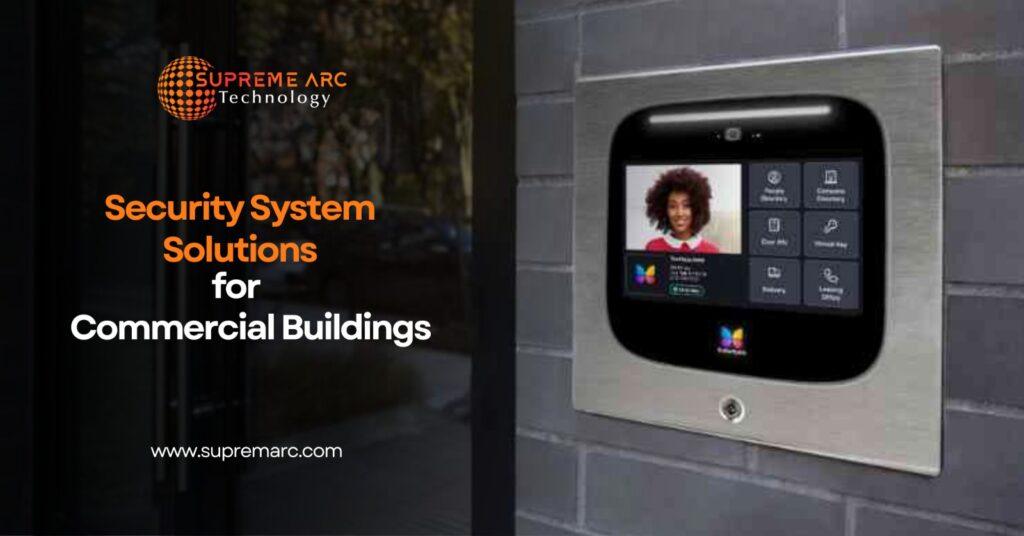
Security System Solutions for Commercial Buildings
Default

Security System Solutions for Commercial Buildings

Nowadays, in a rapidly changing business world, securing commercial properties should not be seen as a choice anymore but a necessity. Different types of commercial properties, such as office buildings, retail stores, warehouses, and factories, need to be secured with highly advanced Security System Solutions that can protect the properties, workers, and the confidential information. Security is no longer the main purpose of the security system only. It also leads to increased productivity, better compliance, and gaining the trust of employees and customers through security. This article describes the impact of the latest security system solutions on the protection of commercial buildings and why businesses should consider making use of integrated security technologies. Why Commercial Buildings Need Advanced Security Business premises encounter a variety of risks such as unauthorized persons entering the premises, vandalism, data breaches, workplace violence, and theft by insiders. Standard lock-and-key systems can’t meet the needs of modern threats anymore. New Security System Solutions enable businesses to use smart technologies together which offer features like real-time monitoring, access control, and automated alerts thereby giving you total visibility and control over your property. Among the main difficulties that commercial buildings have to deal with: A perfect solution covers all these points from a single, expandable system. Core Components of Modern Security System Solutions 1. Access Control Systems Access control systems are used to decide who gets to enter which parts of a building. By using smart cards, PIN codes, or biometric verification, companies can ensure only authorized personnel have access. Highly capable systems give the power to administrators to: Such a level of control can prevent unauthorized entries and foster a sense of responsibility. 2. Biometric Security Systems Biometric technology is rapidly gaining popularity in the commercial security sector. For instance, the Suprema BioStation 3 and Hikvision Face Recognition Terminal are two devices that offer secure authentication through fingerprint or facial recognition. With biometric systems, there is no need to worry about lost or stolen access cards, and they also guarantee that only authorized personnel are allowed to access restricted areas. 3. CCTV Surveillance Systems High-quality CCTV cameras play an essential role in almost all security system solutions. Today’s IP-based cameras offer: Besides, AI-driven analytics remotely identifying at the home for CCTV camera behavior can significantly decrease the necessity of manual monitoring at all times. 4. Turnstile and Entry Management Systems Turnstiles play a role in managing as well as keeping track of the number of people that enter a commercial building. If they are combined with access control systems, they not only control but also give a great security level by allowing only authorized persons to enter the property. The top-notch product such as Mairs Turnstile Gate comes with a wide range of features. It is a combination of security and beauty, which makes it perfect for an office, government building, or commercial complex. 5. Intrusion Detection and Alarm Systems Intrusion detection systems are designed to detect illegal entry attempts through the use of sensors. When an alarm is set off, the security staff gets an instant notification and they can respond quickly. These systems are very important for: Moreover, combined alarm systems may also be linked to the emergency departments so that the help arrives in time. Benefits of Integrated Security System Solutions Besides the basic protection, there are a lot of benefits to be gained when you implement integrated Security System Solutions. 1. Centralized Management The latest systems make it possible for the entire security components, such as access control, CCTV, alarms, and biometric devices, to be integrated into one management system. This not only makes things simpler but also enhances the speed of reaction. 2. Real-Time Monitoring Security personnel can constantly keep an eye on what is going on, get an instant alert, and depending on the location, even get a detailed report. One of the biggest advantages of this system is for those who manage several locations. 3. Improved Employee Safety Employees feel more comfortable and work more efficiently when the environment is safe. Through the use of controlled access, only the staff members who have the authorization will be able to enter the restricted areas. 4. Data-Driven Insights Innovative systems are equipped with analytics and reports that assist the management in knowing the movement patterns, peak entry times, and vulnerabilities. 5. Scalability Security needs to change as the business grows. Today’s systems are scalable and can be readily upgraded without the need to change the entire system. How to Choose the Right Security System Solutions It should be noted that deciding on the right security system will require considering various factors such as the size of your building, the level of risk involved, and how you operate. Here is a list of essential elements to consider: Risk Assessment During the evaluation, concentrate on the most critical concerns of the security system by determining where the weaknesses are and which areas have the highest priority for security. Integration Capability The system you choose should be able to easily interface with other systems, such as those used by HR departments, fire alarms, and buildings. Compliance Requirements Check out the system with respect to local safety regulations and data protection policies to make sure you select an appropriate system. Future Expansion Scalable solutions are the ones that you may opt for because they can scale with your growth. Professional Installation and Support Guarantees of proper installation, configuration, and ongoing technical support can be obtained through the aid of a seasoned security solutions provider. Industries That Benefit Most Security system solutions are very important in various commercial environments such as: Every sector has security needs that are different from the others, thus it is necessary to develop tailor-made solutions. The Future of Security System Solutions Technology is still revolutionizing commercial security. Some of the latest trends are: All these new technologies have turned security into a system that is more clever, flexible, and less draining of resources than at any time before. Conclusion Purchasing state-of-the-art
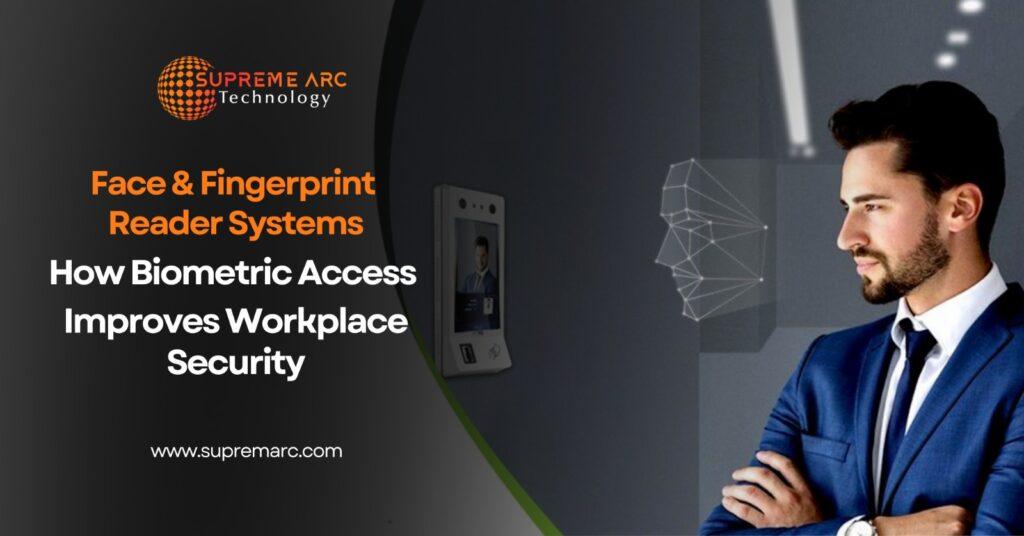
Face & Fingerprint Reader Systems
Default

Face & Fingerprint Reader Systems: How Biometric Access Improves Workplace Security

Workplace security is crucial now more than ever in today’s fast-moving business world. Various thieves and other bad actors find it easier to steal, duplicate, and misuse keys, ID cards, and PIN codes, as such traditional access control methods rapidly lose their protective strength. Modern face & fingerprint reader systems, therefore, appear as a wise, more reliable, and highly efficient choice for the same. Biometric technology is revolutionizing the way access control mechanisms are handled within organizations. A Biometric Face & Finger Print Reader device authenticates identity through completely exclusive biological traits, thereby preventing an unauthorized person from gaining entry even if the area is ‘restricted’. Businesses wanting not only to improve security but also to gain greater operational efficiency through biometric access control systems are definitely heading in the right direction of technological evolution. This blog delves into the Face & Fingerprint Reader systems, their contribution to enhancing workplace security, and reasons why the industry-wide companies are switching to this technology. What is a Face & Fingerprint Reader System? A Face & Fingerprint Reader is a device that identifies people through face and fingerprint scanning. Biometric systems are based on the physical characteristics of individuals, which means they identify a person by who they are, rather than what they have or know. Usually, a Biometric Face & Finger Print Reader contains: Dual biometric systems such as these, allow for dual-layer authentication which results in a significant security upgrade due to the use of two different biometric factors. Why Traditional Access Control is No Longer Enough Most offices continue to use: Nevertheless, the above methods are quite vulnerable to: Such weaknesses can result in unauthorized entry, security breaches from within, and problems with compliance. Biometric Face & Finger Print Reader technology can avoid such problems as biometric features are not borrowable, replicable, or virtually invincible to forgery. How Face & Fingerprint Readers Improve Workplace Security 1. Eliminates Buddy Punching and Attendance Fraud Buddy punching could be the most commonly abused method of attendance fraud in work places that are using manual or card-based attendance system. Employees may be tempted to mark attendance for their friends. The use of Face & Fingerprint Reader links attendance solely to the biometric identity of a certain individual. This means: This comes handy in all the cases such as office, factory, building sites, and warehouse environments. 2. Prevents Unauthorized Access A Biometric Facial and Fingerprint Reader is a great way to restrict access to only the authorized personnel especially in the areas like: As everyone’s face and fingerprints are unique, this prevents any unauthorized person from getting access since it is almost inconceivable. 3. Dual Authentication for Enhanced Security Multi-factor biometric authentication is one of the great benefits of using a Face & Fingerprint Reader system. An organization might set up a system to demand, for example: Having both involved will certainly add an extra layer of security, thus this method will be highly suitable for places with a very high level of security such as government offices, banks, corporate headquarters, etc. 4. Contactless and Hygienic Access Present-day Biometric Face & Finger Print Reader gadgets are capable of contactless facial recognition. This lessens the need for physical contact, a factor that is very much emphasized in post-pandemic work environments. There are benefits such as: Besides, contactless entry upgrades an individual’s experience without compromising the security level. 5. Real-Time Monitoring and Reporting The modern Face & Fingerprint Reader systems can be connected with centralized software platforms. Through the combined effort of HR and security teams, the following can be achieved: Access to real-time data significantly helps decision-making and contributes to better security of the work environment. 6. Integration with Access Control Systems The Biometric Face & Finger Print Reader can be combined with the following: What this means is that an access control ecosystem is automatically generated to ensure a harmonious and secure entry management situation that covers the entire facility. Industries Benefiting from Biometric Face & Finger Print Readers Face & Fingerprint Reader solutions are common in different sectors such as Corporate Offices They make company premises safe, help the staff in recording his/her time, and limit access to confidential sectors. Manufacturing & Warehouses The organizations only let their manufacturing floors through their doors and know the exact number of attendees through the use of attendance software. Healthcare Facilities They use these technologies to manage access to their labs, pharmacies, and medical files. Educational Institutions They protect the campus main gates and check the staff attendance. Government & Financial Institutions Offer top-level identity verification for extremely confidential information sectors. Key Features to Look for in a Face & Fingerprint Reader When buying a Biometric Face & Finger Print Reader, check these features: A correct choice of the system will ensure dependable performance and capability to grow in the future. Cost-Effective Security Investment Biometric systems, though they may appear to be a luxury solution, can provide a number of cost savings in the long run by: Eventually, a Face & Fingerprint Reader represents a wise and cost-effective investment that not only improves security but also increases operational efficiency. The Future of Workplace Security is Biometric Biometric access control is rapidly becoming the new standard rather than an exception as more and more organizations adopt smart offices and digital transformation. A Biometric Face & Finger Print Reader enhances physical security and enables data-driven workforce management. Equipped with AI-powered recognition, cloud integration, and mobile connectivity, the latest biometric systems are very advanced, highly efficient, and dependable. Companies implementing biometric access at present are securing a lead in security, compliance, and operational performance in the future. Why Choose Supreme Arc for Face & Fingerprint Reader Solutions? Supreme Arc is committed to providing advanced Face & Fingerprint Reader systems that cater to the security requirements of today’s workplaces. Our solutions incorporate innovative biometric technology and provide: If you are looking for a single Biometric Face & Finger Print Reader or a fully-functional access control system, Supreme Arc can provide

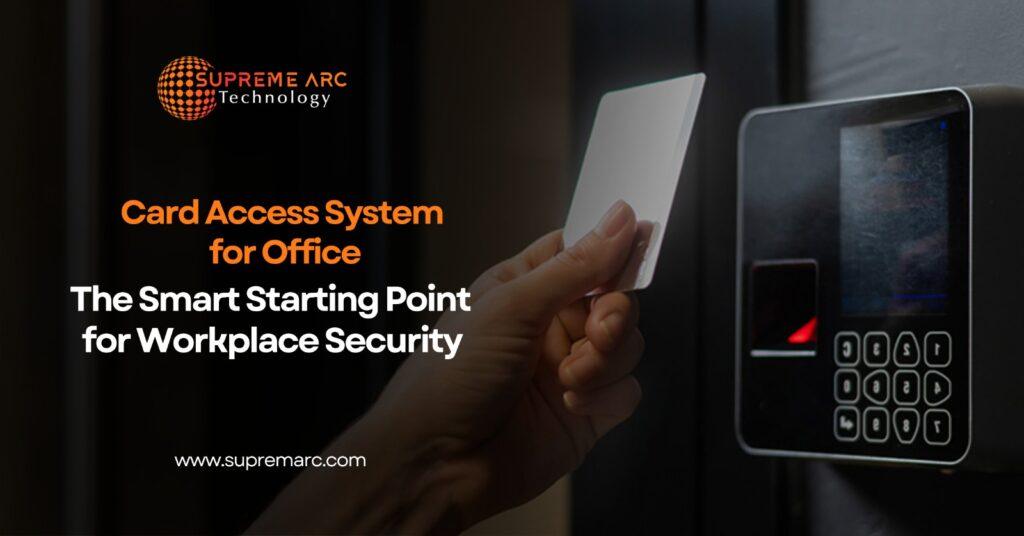
Card Access System for Office
Default

Card Access System for Office: The Smart Starting Point for Workplace Security

Workplace security has become more than just a luxury in today’s fast moving business world it is a necessity. With the expansion of offices, growing teams, and data being more and more valuable, simple lock and key systems are not enough. Therefore, a Card Access System for Office is the clever and easily expandable solution to the security needs of the modern work environment. One advantage of a Card Access Control System is that it offers you protection for your property and at the same time increases the efficiency of operations, employee responsibility, and the general safety level of the place. Let us find out the reasons why card based access control is gradually turning into the first security option for offices of all sizes. Understanding Card Access Systems for Offices A Card Access System for Office is an electronically controlled security system that restricts entry to specific areas by using access cards, key fobs, or smart credentials instead of traditional keys. Each card has been programmed with different access rights, so that only those staff who have been granted permission can get into particular rooms or areas. Such systems are installed in a variety of environments like corporate offices, coworking spaces, IT companies, government buildings, and commercial complexes as they are dependable and versatile. Why Offices Are Moving Away from Traditional Locks Traditional lock systems are problematic in many ways: Card Access Control Systems capable of tracking, centralized managing, and quick change of rights are a perfect solution to these problems and a good fit for a modern work environment. Key Components of a Card Access Control System A sturdy Card Access Control System is usually composed of the following: 1. Access Cards or Smart Credentials These may include RFID cards, smart cards, or mobile based credentials that are given to each user. 2. Card Readers Readers are devices that are fixed at entrance points, which scan the card and check for authorization. 3. Access Control Panel The heart of the system that handles access requests and instructs door locks. 4. Electronic Door Locks Which opens automatically when the right access is granted. 5. Management Software Enables admins to keep track of access, manage users, and create reports. Benefits of Using a Card Access System for Office Enhanced Workplace Security Installing a Card Access System for Office can be a means to keep intruders out. You can customize the access according to roles, departments, or working hours thus keeping the most sensitive places of the company always safe. Centralized Access Management Human Resources or administrative departments can control the access of employees at the flick of a switch, which can be quite handy during the time when new employees are getting oriented or when employees are leaving the company. Real Time Monitoring and Audit Trails The system keeps a log of each entry and exit, which is very useful for audits, compliance, and incident investigations. Cost Effective in the Long Run The access cards don’t wear out the locks like the mechanical keys do. If a card is lost, it can just be deactivated and replaced. Scalable and Future Ready When your office grows, the Card Access Control System will be able to add new doors, floors, or locations without any problems. Improving Employee Experience and Productivity Security should not be a hurdle to your operations. Installing a Card Access System for the Office helps to keep operations running smoothly and fast as it minimizes the delay during rush hours. Staff members gain easy access without the need to carry several keys. Moreover, coupling the system with attendance or time tracking modules can significantly lighten the task of managing the workforce. Customizable Access Levels for Better Control A Card Access Control System has many great features but among them the biggest advantage a Card Access Control System has is its flexibility. You can: This kind of controlling can greatly lessen the chances of becoming a security victim from the inside. Integration with Other Office Security Systems Modern card access solutions have the capability to connect easily with: With the help of various technologies, workplaces can create a total and smart security environment. Compliance and Data Protection Numerous sectors mandate adherence to rigorous security and data protection criteria. An Office Card Access System can be a beneficial tool in compliance with regulatory standards as it keeps detailed records of access and also helps in securing restricted areas. Such a concern is of paramount importance to IT companies, financial institutions, and other entities managing sensitive data. Why Supreme Arc for Card Access Control Solutions? We, the Supreme Arc, understand the need for different security arrangements in different work environments. Our Card Access Control System service ensures the delivery of our solutions, which are characterized by reliability, expandability, and usability. What Sets the Supreme Arc Apart? Be it a small office or a big corporate space with a number of floors, Supreme Arc is the reliable option, and we can provide you with the complete access control solutions. Choosing the Right Card Access System for Your Office When picking a Card Access System for Office, take into account: Choosing a seasoned provider such as Supreme Arc will help you identify the correct system for your needs, rather than just purchasing a product. The Smart First Step Toward a Secure Workplace Installing a card access control system goes beyond merely changing door locks. What you are basically doing is taking a strategic step toward having a smarter, safer, and more efficient workplace. With a central power, better security, and the ability to grow scalable, grant card systems are a base line of security in a modern office. In case you want to upgrade your work area’s safety with a trustworthy Card Access System for Office, Supreme Arc can be relied upon to be your partner. Contact our professionals now and turn the wise first step into a secured workplace.

Queue Ticketing System
Default

Queue Ticketing System: How It Improves Customer Flow and Reduces Waiting Time

Customer experience is undoubtedly a critical factor for the success of businesses nowadays. When customers face long queues, unclear waiting processes, and overcrowded service areas, they get frustrated, leave negative feedback, and may even stop doing business with that company. A Queue Ticketing System is the key to solving such problems. At the same time, they help organize customer flow and reduce the perceived waiting time, thus making the overall service experience smoother, faster, and more satisfying. Our focus at Supreme Arc is on smart queue management systems, which not only set a new standard for the customer experience but also provide a number of operational benefits and advantages to the ​‍​‌‍​‍‌business. What​‍​‌‍​‍‌ is queue ticketing ​‍​‌‍​‍‌system? A​‍​‌‍​‍‌ Queue Ticketing System is an organized way of managing customer traffic by providing customers with tokens or ticket numbers when they arrive. Instead of queuing, the customer is provided with a ticket number and is free to rest while waiting for his or her turn. These can be manual, electronic, or even automated. Queue ticketing systems have now become a standard tool in banks, hospitals, government offices, retail outlets, telecom service centers, and hospitality centers where it is of critical importance to manage a large number of ​‍​‌‍​‍‌customers. The Challenge of Poor Queue Management Several​‍​‌‍​‍‌ problems are caused to businesses if they do not have a proper queue management process: It is a common belief that customers link long waiting times with inferior service quality, although the service in most cases might be very good. That is why effective queue management is not only a means of smooth operation but can even provide a competitive ​‍​‌‍​‍‌edge. How a Queue Ticketing System Improves Customer Flow A well-designed Queue Ticketing System provides a clear and orderly path for customers, resulting in a more seamless experience from their arrival until the service completion. 1. Service Order That Is Fair, Efficient, and Transparent Most queue ticketing systems run on a first-come, first-served basis (or according to a set priority rules). This ends the confusion, fights, and the perception of favoritism, thus setting up a fair and transparent customer service environment. 2. Lessened Waiting Area Crowds If physical lines are taken away, people waiting for their turn can do so in a less crowded and more relaxed environment. This boosts safety, cleanliness, and makes the best use of the space, particularly in places with heavy foot ‌​‍‌traffic. 3.​‍​‌‍​‍‌ Faster Service Allocation Queue systems allow staff to concentrate on customer care instead of handling line situations. With automated call-forward features, the following customer is always prepared, thus the waiting time between two services is kept at the absolute minimum. 4. Better Resource Utilization Modern queue ticketing systems help to understand when the busiest periods are, how long the service lasts, and what the staff performance is. Companies are thus able to distribute their counters and staff in the most efficient way by following the live ​‍​‌‍​‍‌demand. How Queue Ticketing Systems Reduce Waiting Time Even if genuine service time stays unchanged, a Queue Ticketing System can help lower the actual and especially the perceived waiting time. 1. Trust Through Transparency Customers find it more comfortable to wait in a line when they are aware of their place in the line and can track their progress on digital displays. 2. Flexibility During the Wait Consumers no longer have to line up. They can do something else like sitting, browsing, filling in the forms, or even taking a short break without losing their spot—thus the waiting time seems to be ​‍​‌‍​‍‌less. 3.​‍​‌‍​‍‌ Priority-Based Queue Handling Queue ticketing systems may segment customers into various categories like VIPs, elderly or appointment holders and correspondingly provide them faster services. 4. Performance Monitoring and Optimization Internal analytics allow businesses to pinpoint inefficiencies and take measures such as opening more counters at peak times or changing the distribution of staff to different ​‍​‌‍​‍‌tasks. Key Benefits of a Queue Ticketing System for Businesses Implementing​‍​‌‍​‍‌ a Queue Ticketing System yields measurable benefits to customers and service providers alike: If a business is service focused, queue management is turned from an operational tool into a competitive ​‍​‌‍​‍‌differentiator. Industries That Benefit from Queue Ticketing Systems Queue​‍​‌‍​‍‌ ticketing systems can be used in many different industries really effectively: Pretty much every sector benefits with reduced waiting times, increased customer engagement, and efficient ​‍​‌‍​‍‌operations. Why Choose Supreme Arc for Queue Ticketing Solutions? We at Supreme Arc understand that every business has unique service challenges. We provide queue ticketing solutions that can be scaled up, simple to use, and can be customized to meet your business requirements. We focus on: We at Supreme Arc understand your needs and hence, whether you have a single counter or a multi-branch business, we provide you with queue management solutions that do not just enhance your productivity but also upgrade your customer experience. Conclusion A Queue Ticketing System is definitely not a luxury anymore it’s a must-have for any business that wants to keep their customers happy and their operations running smoothly. Queue ticketing systems allow a business to completely change the first impression of a crowded and chaotic waiting area through better management of customer flow, decrease in waiting times, and disclosure of service procedures. Working with Supreme Arc and implementing the appropriate queue management system, a business can actually turn customer’s waiting time into a positive experience, build the customer trust, and raise the bar for other companies in terms of customer service ‍​‍​‌‍​‍‌quality.

Access Control for Schools
Default

Access Control for Schools: Common Implementation Mistakes and How to Avoid Them

Providing​‍​‌‍​‍‌ a safe environment for learning has become not only a mission but even a necessity for all educational institutions worldwide. Schools nowadays are more than just educational places—they have turned into complex settings where students, teachers, staff, visitors, and vendors are continuously coming and going throughout the whole day. Access Control for Schools is exactly the tool that helps ensure that a school remains a secure and well-organized place for learning. It is no secret that access control systems are a very effective measure to improve school safety in security planning. However, when poorly planned or implemented, their safety features may get diminished. The Supreme Arc team, having encountered and solved many issues, point out that hardly ever were those due to the technology itself but rather to improper implementation. We address in this post some of the major errors in school access control that can be avoided relatively ​‍​‌‍​‍‌easily. Why Access Control Is Essential for Schools Access control systems are in charge of deciding who can go into designated parts of a school, when they can do so, and under what circumstances. Contemporary technologies offer features such as card access, biometric authentication, mobile credentials, and integrated visitor management ​‍​‌‍​‍‌systems. If​‍​‌‍​‍‌ done right, Access Control for Schools can be very effective to: But, turning the potential of these benefits into reality demands careful planning and ​‍​‌‍​‍‌work. Common Implementation Mistakes in School Access Control 1.​‍​‌‍​‍‌ Treating Access Control as a Standalone System A major mistake most schools make is implementing access control without considering other protective measures. If the access control system is not combined with the CCTV, alarm, or visitor management systems, security loopholes will be inevitable. Avoiding the situation: Opt for a security ecosystem that is integrated. To offer a complete situational awareness, the access control must be able to function perfectly with the surveillance video cameras, intrusion detection, and emergency alert ‍systems. 2.​‍​‌‍​‍‌ Ignoring School-Specific Security Needs Schools differ significantly in their size, layout, age groups, and daily activities. Hence, an Access Control for Schools plan based on the same template often results in various inefficiencies. How to avoid: Before implementation, do a thorough site assessment. Focusing on locating the vulnerable areas such as: Set access levels according to the student age, the staff roles, and time ​‍​‌‍​‍‌schedules. 3.​‍​‌‍​‍‌ Poor Credential Management Misplaced cards, shared login credentials or user accounts no longer in use can be a major security concern. Quite a few schools don’t update access permissions regularly after their students graduate or staff members leave. How to avoid it:Centralize credential management, and make access dependent on roles. Make sure: Use of mobile or biometric credentials can also help in preventing their ​‍​‌‍​‍‌misuse. 4.​‍​‌‍​‍‌ Overlooking Visitor Access Control Visitors to schools, be they parents, contractors, or vendors, often represent the most vulnerable link in the security of a school. Traditional manual visitor logs have become obsolete and are not dependable. How to avoid it:  Bring visitor management under your overall access control system. A cutting edge solution should: This considerably enhances Access Control for Schools without interfering with regular school ‍​‍​‌‍​‍‌routines. 5.​‍​‌‍​‍‌ Focusing Only on Entry Points It is usual for many schools to secure the main gates while they do not control internal access. Staff rooms, computer labs, or any storage areas if taken as their access by staff are left open, which only can heighten internal threats. How to avoid it:  A layered security approach should be taken. Access control should be enforced not only at the points of entry to the building but also at the internal areas considered as sensitive so that the whole school can be a safe ​‍​‌‍​‍‌place. 6.​‍​‌‍​‍‌ Choosing Technology Without Scalability Schools don’t stay the same. There are more students and new buildings, and the needs for school operations change.Non-scalable systems are very likely to go out of use. How to avoid the mistake: Pick a scalable and future-ready access control system that will be the basis for: That way, you can be sure of a long-term value and that it can be ​‍​‌‍​‍‌adapted. 7.​‍​‌‍​‍‌ Lack of Staff Training and Awareness Yet, an Access Control for Schools system with the greatest features will not be effective if the staff is not properly trained how to use it. There are times when misuse or workarounds compromise security. How to avoid it: Make it a habit to train administrators, teachers, and security personnel regularly. Let them understand thoroughly: Awareness of users is equally crucial as the technology ​‍​‌‍​‍‌itself. How Supreme Arc Supports Secure School Environments Supreme​‍​‌‍​‍‌ Arc has been in the business of developing and deploying smart Access Controls for Schools that are safe, efficient, and scalable. Our solutions integrate cutting-edge technology with smart design, thus making sure that the security of schools is done in such a way that the school environment continues to be a warm and welcoming place for students. We work with educational institutions through the different stages of security deployment such as consultation, system design, installation, and maintenance. This way, we prevent them from making costly errors and help them establish a solid security framework that perfectly fits their ​‍​‌‍​‍‌needs. Conclusion Access​ control has become an essential part of keeping schools safe, not just a convenience. Schools that know the typical pitfalls in the rollout of such a system can avoid them and thus can greatly raise the level of security and alleviate the worries of students, parents, and staff. When your team is well planned and guided by the experts at Supreme Arc, the Access Control for Schools is not only a tool but a strategy to help you achieve safer and more intelligent learning ​‍​‌‍​‍‌environments.

Cloud Based Queue Management Systems
Default

How Hospitals Benefit from Cloud Based Queue Management Systems

The patient experience is as significant as clinical excellence in the healthcare sector of the modern-day, which moves at a very rapid pace. Waiting in long lines, dealing with an overcrowded reception area, poor communication, and inefficient patient flow are still the main problems that hospitals face in different parts of the world. While healthcare facilities are working hard to improve efficiency and quality of service, cloud-based Queue Management Systems are becoming a revolutionary solution. These contemporary Queue Management Systems are capable of automating the whole patient journey, that is, from registration to service completion, thus, hospitals are able to decrease waiting time, regulate service delivery, and create a more comfortable, patient-friendly atmosphere which is also free from stress for the personnel. Thanks to cloud technology, which is the source of power for these systems, hospitals are now able to get a snapshot of the situation at any time, have a centralized control system, and increase their capacity as they ​wish. What Is a Cloud Based Queue Management System? A cloud based Queue Management System is a digital facility that enables hospitals to manage patient queues via the internet as opposed to using manual token systems or physical lines. With the help of the system, patients are able to: Hospital employees can observe the patient flow through a single dashboard, can distribute the resources according to the workload, and can make the operations more efficient. As the system is entirely cloud based, hospital managers are allowed to have access to the insights, analytics and the operational data at any time and from any place. This is a way to ensure smooth performance of the operations in different branches and ​‍​‌‍​‍‌departments. Why Hospitals Are Shifting to Cloud-Based Queue Management Systems 1. Reduced Patient Waiting Time One of the major benefits of the installation of Queuing Management Systems is the reduction of waiting time. Hospitals are frequently faced with the problem of over-crowded receptions during their peak hours. The situation is made worse if the patients are called manually or given token slips. With cloud-based patient flow management system, all the patient movements from registration to consultation are automated and thus: Moreover, the system will send a notification automatically when the patient’s turn is near. This goes a long way in helping to provide a better organized patient experience and thus the level of frustration is ​‍​‌‍​‍‌minimized. 2. Improved Patient Satisfaction and Experience Nowadays,​patients demand ease and clarity. Hospitals with Queue Management are offering a comfortable, digital journey to patients where they are able to: It is a fact that patients’ happiness will go up to a very high level when they are given information and treated with respect, which is a very important factor for the hospital reputation and ​‍​‌‍​‍‌trust. 3. Enhanced Hospital Staff Efficiency Hospitals are usually filled with scenarios in which the staff have to spend a lot of time on manual and monotonous management of queues, handing out tokens, or calling patients by their names. A Queue Management System would be the solution to this problem of personnel being freed from these tedious tasks. Hospital workers would thus be able to give more focus to: The system is also instrumental in sharing the workload among the different counters, thus, eliminating bottlenecks and increasing the efficiency of the ​‍​‌‍​‍‌staff. 4. Centralized Control & Multi Branch Management Cloud based​‍​‌‍​‍‌ Queue Management Systems are a great tool for multi-branch hospitals. Using a central dashboard, administrators have the ability to control all the branches, among other things: The centralization of the process guarantees the standardization of the patient experience in every ​‍​‌‍​‍‌location. 5. Real Time Analytics and Reporting Cloud based systems record every patient movement and operation are details on a safe cloud server. The hospitals are in a position to use this data in order to understand deeply the following phenomena: Such insights enable hospital management to decide wisely, improve resource planning and keep on upgrading service ​‍​‌‍​‍‌delivery. 6. Easy Scalability and Low Maintenance Costs In contrast to conventional on site systems, cloud based QMS are not dependent on substantial hardware, manual updates, or IT maintenance. So hospitals enjoy: – Software upgrades that are automated and done through the cloud – Ability to scale as the hospital operations expand – Reduced upfront costs – Connectivity with present hospital systems As a result, cloud queue management is an economically viable solution for hospitals ranging from small to large ​ones. 7. Better Patient Flow Across Departments Typically,​hospitals are composed of several departments that include reception, OPD, laboratory, radiology, pharmacy, and billing. Communication between the different departments, which is not coordinated, is the main cause of delays that are quite often unnecessary. QMS manage patient flow in all departments in the following ways: – By the automatic transfer of tokens – By keeping track of the load in each department – By informing patients about the following steps – By guaranteeing the smooth movement without the occurrence of confusion It effectively eliminates to a large extent the disorder that arises from the hospital activities and enhances hospital ‍​‍​‌‍​‍‌efficiency. 8. Reduced Overcrowding and Improved Safety Excessive crowding is not only a situation that people dislike, but also it can raise the risk of infections. Thus, it is very important in the present healthcare world to keep patient transfers safe and under control. QMS play a role in lessening the crowd that comes: As a result, the hospital becomes a more tranquil, secure, and well organized ​place. How Queue Management Systems Improve the Overall Hospital Ecosystem A​‍​‌‍​‍‌ cloud-based Queue Management System goes far beyond being just a digital tool, it is essentially a solution for the complete patient experience overhaul. It improves: Thus, the whole hospital ecosystem turns into a more organized, efficient, and patient friendly ​environment. Why Choose Supreme Arc’s Queue Management Solutions? We​‍​‌‍​‍‌ at Supreme Arc, are committed to providing innovative digital solutions which are able to change the healthcare operations fundamentally. Our cloud based QMS are the perfect fit for hospitals aiming

Attendance Problems HR Teams Face and How an AMS Solves Them
Default

5 Common Attendance Problems HR Teams Face and How an AMS Solves Them

The management of employee attendance falls among the top vital tasks of a HR department of any kind of organization. Nevertheless, if you continue using manual registers, Excel sheets, or old biometric devices, it won’t take long for attendance tracking to become a complicated process that consumes too much of your time. The present workforce is demanding accuracy, transparency, and efficiency and it is precisely a contemporary Attendance Management System (AMS) that meets these needs. Here we dive into five most frequent attendance problems of HR teams and the way an advanced attendance system for employees can solve them ​‍​‌‍​‍‌effortlessly. 1. Buddy Punching and Time Theft Buddy​‍​‌‍​‍‌ punching, which is defined as the action of one employee clocking in for another, is a frequently encountered problem in companies that do not have adequate authentication procedures. Misuse of working hours, taking long breaks, and making fake records are some of the ways through which businesses can lose a substantial amount of ​‍​‌‍​‍‌money. How an AMS Solves It: An​‍​‌‍​‍‌ advanced employee attendance system incorporates highly secure identification methods to completely remove the problem of buddy punching, for example: Such measures put beyond doubt that the correct employee is the one who is recording their attendance, thus time theft is cut down ​‍​‌‍​‍‌drastically. Benefits include: 2. Lack of Real Time Data and Insights In numerous companies, HR divisions lack the facility to view live attendance records. Consequently, they are delayed and their decision making process is affected negatively. Managers might be unaware of: How an AMS Solves It: An intelligent employee attendance solution offers interactive dashboards and detailed analytics in real-time. Main benefits: Such a move enables HR managers to have more effective decision-making, enhance workforce planning, and increase total ​‍​‌‍​‍‌productivity. 3. Manual Errors and Inaccurate Time Tracking HR teams heavily suffer from inaccurate manual attendance processes, which is one of their biggest pain points. Paper registers or simple spreadsheets are susceptible to: Such errors may result in disputes over salaries, problems with compliance, and disgruntled ​‍​‌‍​‍‌employees. How an AMS Solves It:  Extensions​‍​‌‍​‍‌ to a current Warehouse Management System for a DRR project can also be excellent additions to a modern distribution system. Employees can use any type of device such as fingerprint machines, RFID cards, or mobile phones to clock in. Any records distributed are up to date at the time of their execution, leaving no room for mistakes. Key benefits: HR teams having accurate digital logs do not need to spend their hours in attendance corrections or resolving ​‍​‌‍​‍‌disputes. 4.  Complex Payroll Processing Due to Disorganized Attendance Data One of the main problems for HR teams is that payroll is directly linked to attendance, and if the attendance data is inaccurate or messy, then payroll becomes a nightmare. As a result, HR teams are often confronted with: How an AMS Solves It:  With the help of payroll modules, an Attendance Management System keeps a record of all working hours, overtime, and leave details that are automatically updated. Advantages: As a result, it is possible to have salary payments on time and the level of employee satisfaction has increased. 5. Difficulty Tracking Leaves, Shift Changes, and Remote Attendance Manual​‍​‌‍​‍‌ attendance tracking is a herculean task for companies having flexible schedules, various shifts, field staff, or remote workers. It is a challenge that the HR teams are frequently confronted with and often find themselves in a dilemma such as: How an AMS Solves It: An Attendance Management System that is based on the cloud is able to gather the attendance data of everyone in one place. Some of the main features are: The attendance of employees will be recorded accurately and instantly whether they are in office, on site, or working from ​‍​‌‍​‍‌home. Why Every Business Should Invest in an Attendance Management System Manual attendance tracking is just not fast enough for the fast-paced environment of business in today’s world. Due to the increasing mobility of the workforce, the hybrid working system, and the compliance requirements, organizations have to take care of themselves to get a solution that is reliable, automated, and ​scalable. An​‍​‌‍​‍‌ effective Attendance Management System provides: For scale up businesses and large corporations, an AMS has become something essential, rather than just a ​‍​‌‍​‍‌nice to have. Conclusion Poor attendance may look like a minor issue, but they affect in a very direct way the business performance of the HR department, the accuracy of the payroll, and the general atmosphere among the staff. Organizations that upgrade their staff attendance system to a digital one can thus stop making mistakes, discourage stealing of time, make payroll easier, and also they acquire the ability to check their workforce in real time. At Supreme Arc, we deliver cutting-edge Attendance Management Solutions adaptable to any sector. The AMS of our company is your perfect partner in achieving smooth, trustworthy, and safe attendance tracking of a small team, or even a large workforce spread across multiple locations , thus facilitating the work of HR ​‍‌employees.

Access Control System Distributor
Default

What to Look for in an Access Control System Distributor: A Complete Buyer’s Guide

In a world that is heavily focused on security, the selection of an Access Control System Distributor that is compatible with your needs is equally as important as the choice of the access control technology itself. If you are renewing your company’s security system, increasing the volume of your business, or simply introducing access control for the first time, the distributor with whom you cooperate can be the factor that changes your project from a success to a failure. Their knowledge, assistance, range of products, and trustworthiness not only have a direct impact on the functionality of the system, its scalability over time, and the total ROI but also on the user’s experience. This manual clarifies all the aspects which you need to consider when assessing access control suppliers, thus enabling you to decide wisely and with ​‍​‌‍​‍‌confidence. 1. Evaluate Their Product Portfolio Experimenting​‍​‌‍​‍‌ with an access control system in the professional industry environment requires a distributor who can provide the latest technology. Consider the sellers who offer the following products ​‍​‌‍​‍‌ 2. Technology Expertise & Certifications It is a must that your distributor be more than just a reseller of the products. They should be the ones with the deep expertise. Prior to sealing the deal with them, verify whether they provide: An informed distributor is the guarantee that, among other things, your system installations will be done without problems, updates will be carried out on time, and troubleshooting will be ‍​‍‌efficient. 3. Experience with Your Industry Each single industry, be it corporate, healthcare, logistics, government, education, or manufacturing, is characterized by distinct security and compliance requirements that are different from one ​‍​‌‍​‍‌another. An​‍​‌‍​‍‌ efficient Access Control System Distributor must have knowledge of: It is safer to work with a supplier that has the necessary experience in your industry. This will result in fewer risks, better precision, and the system functioning at its best right from the first ​‍​‌‍​‍‌day. 4. Integration Capabilities Modern access control systems need to be able to connect with other business tools in order to work effectively. Find out from the distributor if they can integrate ​‍​‌‍​‍‌with: 5. Reliability of Hardware & Brands Quality​‍​‌‍​‍‌ hardware is what counts. A good distributor only partners with trusted global brands that are known for their durability, performance, and long ​‍​‌‍​‍‌life. Essential criteria to check: What is more, a cheap device will not have a long lifetime, so you will have to replace it more ​often. 6. Strong After-Sales Support Once​‍​‌‍​‍‌ the installation is done, a distributor who vanishes from the scene is definitely not the kind of investment that you want. Consider those access control providers who offer the ​‍​‌‍​‍‌following: 7. Scalability & Future-Proof Solutions As​‍​‌‍​‍‌ the security demands of your company increase, the distributor from whom you buy should have the solutions that: Implementing an access control system that is adaptable to changes in the future leads to fewer expenses and less hassle with the infrastructure later ​‍​‌‍​‍‌on. 8. Transparency in Pricing Prices​‍​‌‍​‍‌ must be understandable, attractive to buyers, and in harmony with the general pricing of the market. Make sure the distributor is fully transparent with the following before you give your final ​‍​‌‍​‍‌approval: A transparent cost structure helps you plan your budget and avoid surprises later. 9. Local Presence & Quick Availability A​‍​‌‍​‍‌ local distributor can offer: Partnering with a local supplier for your access control needs is time saving, risk lowering, and provides you with an overall seamless end to end ​‍​‌‍​‍‌experience. 10. Customized Solutions & Flexibility Each​‍​‌‍​‍‌ company has its own distinctive security needs. So, the first question your access control distributor must answer is whether they can: This is what guarantees that you will get the exact type of solution that is appropriate for your needs and not a one-size-fits-all ​‍​‌‍​‍‌product. 11. Proven Track Record & Testimonials It​‍​‌‍​‍‌ is a must to check these first if you are about to decide: The ability to meet the customer’s needs over time clearly demonstrates the company’s dependability and loyalty to a positive relationship with the ​‍​‌‍​‍‌customer. Conclusion The​‍​‌‍​‍‌ selection of a proper Access Control System Distributor is a chore of a high level strategy, which is going to be the determining factor for the organization’s safety, the smooth flowing of the activities, and the compliance with the rules and regulations given of the higher authorities. You can thus choose to collaborate with an access control provider who will be your source of genuine enduring worth if you weigh up the factors of their product knowledge, the ability to integrate, the possibility to expand, the quality of support, and the general ​‍​‌‍​‍‌professionalism. At Supreme ARC, we have the know-how that we have gained over the years in advanced RFID, biometric, face recognition, and smart access control systems, made for modern enterprises, government, commercial buildings, and high security environments. Our on end solutions are your security, integration without a hitch, and performance that is ready for the future, ​‍​‌‍​‍‌guaranteed.

Choosing the Right Access Control System for Your Industry
Default

Choosing the Right Access Control System for Your Industry

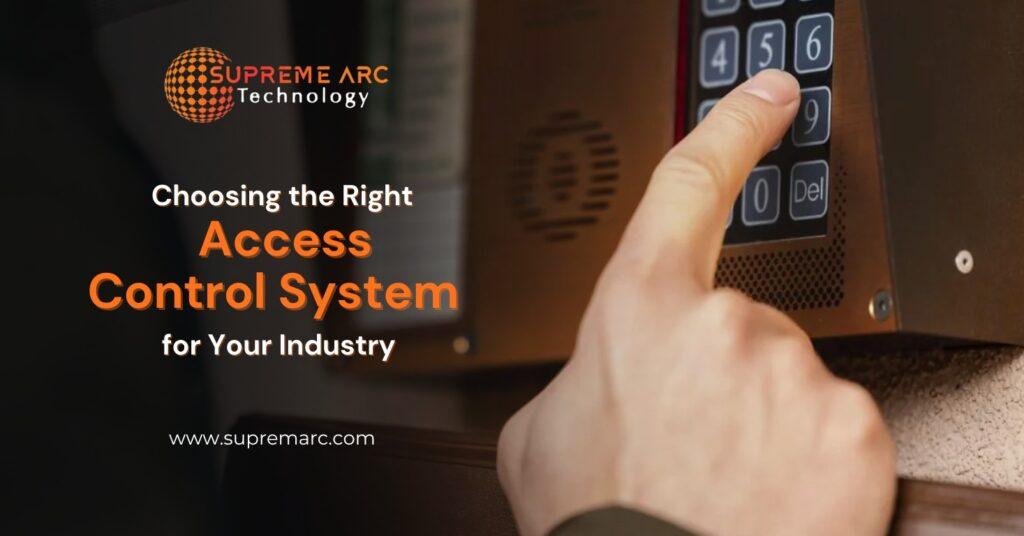
Businesses of all industries are going out of their way to find better, safer, and more efficient methods of limiting access to their area in a security focused environment. A healthcare facility, a school, a corporate office, or a production plant, what may be a system to manage access is still not just a mere option; it has become a ​necessity. At​‍​‌‍​‍‌ Supreme Arc, we know that different organizations have different kinds of security problems. The decision of which access control solution to use can be the factor that ensures safety, leads to operational efficiency, and makes user convenience easy. However, how can you make a choice of the right one? We can figure out that by looking at the factors, benefits and industry specific needs that help to make the ​‍​‌‍​‍‌decision. Understanding Access Control Systems An Access Control System is a mechanism that determines the people who are allowed to come in or go out of a facility, room, or digital environment. Such systems have the capacity to vary from straightforward card based entry systems to sophisticated biometric and cloud based access ​‍​‌‍​‍‌platforms. Contemporary systems are not merely barriers to intruders; they provide analytics, can be integrated with attendance management, and give a full account of people movement in your area. Thanks to progressing technology, such systems have gained intelligence, can be easily expanded, and are more convenient for users than ​‍​‌‍​‍‌before. Types of Access Control Systems Firstly,​‍​‌‍​‍‌ it is necessary to have a clear understanding of the major different kinds that are available for purchase in the market before making a proper selection: Factors to Consider When Choosing an Access Control System Different​‍​‌‍​‍‌ industries have different operational needs, but there are a few universal factors that should always be the main consideration in your ​‍​‌‍​‍‌selection: 1.​‍​‌‍​‍‌ Level of Security Needed It is possible that a small retail store will require a security system of a different level than a pharmaceutical company or an airport. Determine how sensitive your information, valuables, and the safety of people are, and then you will know what kind of security measures are ​necessary. 2.​‍​‌‍​‍‌ Scalability The growth of the system has to be in line with the growth of your organization. A system for managing access which is capable of being extended to cover several locations or take in additional users without having to be changed entirely, ought to be your ‍ ‌ ‍ ‍ ‌‍​‍‌choice. 3.​‍​‌‍​‍‌ Integration Capabilities Today businesses have several systems in place like CCTV, fire alarms, attendance management, and HR software. Choose a door access control solution that is compatible with your current security and management ​‍​‌‍​‍‌setup. 4.​‍​‌‍​‍‌ User Experience Security in a system is definitely a plus but if the system is inconvenient then it would be a problem. The employees and visitor experience can be elevated through the use of such features as contactless entry, mobile app access, or quick ​‍​‌‍​‍‌scanning. 5.​‍​‌‍​‍‌ Data and Reporting An elaborate system charts out in fine detail the identities of people, the parts of the building they accessed, the time and even the length of their stay. These kinds of statistics may be used to elevate up-stand and security management to a higher ​‍​‌‍​‍‌level. 6.​‍​‌‍​‍‌ Budget and Maintenance The best option is a compromise between the device’s efficiency, its price, and the maintenance that will be required in the long run, even if one may be tempted to simply pick the most cutting edge ​technology. Access Control Solutions for Different Industries Different sectors work differently and thus, their security priorities are also different. In what way should one adjust their Access Control Solution to correspond with the requirements of the ​‍​‌‍​‍‌industry? 1.​‍​‌‍​‍‌ Corporate Offices Companies that have big teams with different departments can greatly benefit from using Role Based Access Control. The system makes sure that the workers can only go to the places that are necessary for their jobs. Moreover, the connection with the attendance systems makes the whole process of payroll and time tracking very easy and ‍​‍‌efficient. Recommended​‍​‌‍​‍‌ Features: 2.​‍​‌‍​‍‌ Healthcare Facilities Medical centers and clinics are the places that handle a variety of sensitive information, substances that are tightly regulated and equipment that is extremely important. The access must be very carefully limited in the different departments, laboratories, and offices of the hospital. ​‍​‌‍​‍‌ Recommended​‍​‌‍​‍‌ Features: 3.​‍​‌‍​‍‌ Educational Institutions Educational establishments should be safe and accessible at the same time. With the help of access control, any place can be secured where people enter, be it a school or a university; this can be a dormitory, an administrative office, etc. Also, the student attendance tracking becomes more ​convenient. Recommended​‍​‌‍​‍‌ Features: 4.​‍​‌‍​‍‌ Manufacturing & Warehousing Production plants, logistics centers, and storage facilities have to safeguard valuable goods and maintain safety during operations. The use of role and zone based access control can effectively stop the occurrence of people without proper authorization entering the areas with access restrictions or the zones that are ​dangerous. Recommended​‍​‌‍​‍‌ Features: 5. Hospitality & Retail ​‍​‌‍​‍‌ Hotels, malls, and retail chains are mainly concerned with customer experience and the smooth running of their operations. Security is guaranteed by access control solution that allow the flow of guests, staff, and vendors to be uninterrupted and safe. ​‍​‌‍​‍‌ Recommended​‍​‌‍​‍‌ Features: Why Supreme Arc? At Supreme Arc, a one size fits all approach to security is something we do not believe in. Our Access Control Solution is customized by us to fit the industry your operational flow, size, and security needs. We are proficient in advanced technologies of the security domain which include but are not limited to Radio Frequency Identification, biometric access, cloud managed and hybrid systems. Our team is capable of achieving an effortless integration with the infrastructure that you currently have besides delivering a full range of services which entail the installation, configuration, and ​‍​‌‍​‍‌support. Conclusion Choosing an appropriate Access Control Solution is not solely related to the mechanical act of securing a door; rather, it is also about offering safety, effectiveness, and

Key Features to Look for in a Cloud-Based Biometric Attendance Solution
Default

Key Features to Look for in a Cloud-Based Biometric Attendance Solution

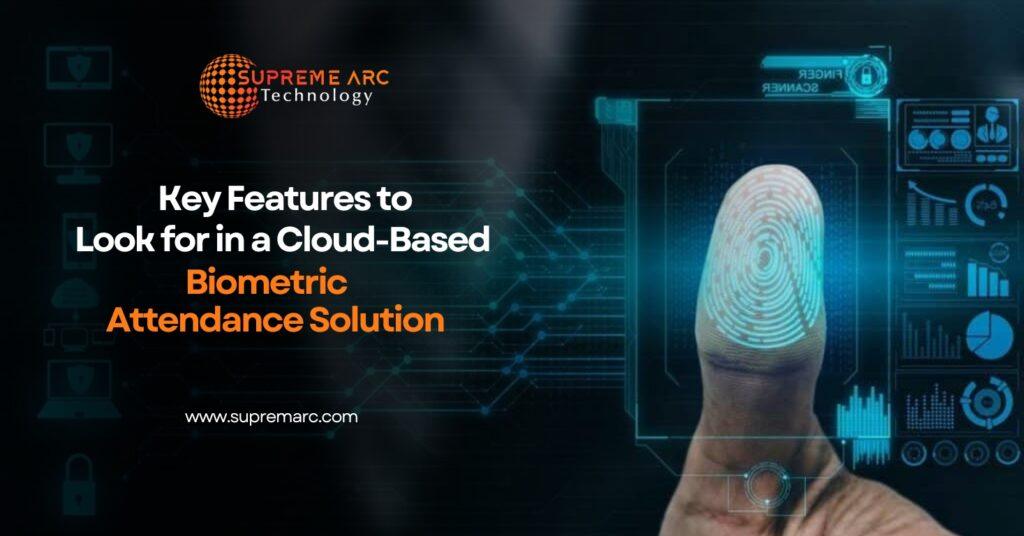
Cloud based biometric attendance systems are the next big thing in office management setups worldwide, knocking down the traditional timekeeping methods one after another in front of the changing requirements of the fast moving world. Organizations today are aiming at smart time management and attendance recording through technology, thereby eliminating the problems arising from manual errors, proxy attendance and the risk of data ‍​‍​‌‍​‍‌losing. At​‍​‌‍​‍‌ Supreme Arc, it is our belief that a proper and efficient technology should essentially make one’s workday simpler and not difficult. Cloud enabled biometric attendance tracking is indeed that kind of technology— it makes the management of employees easy, safe, and available from any location. However, the question remains, with such a vast array of choices available in the market, how do you pick the most suitable one for your company? These are the features that matter the most in a cloud based biometric attendance ​‍​‌‍​‍‌system. 1. Real Time Data Access and Centralized Dashboard One significant merit to having your biometric attendance solution cloud based is the live availability of data. In the case of conventional systems, attendance records are saved locally and syncing is done manually. While in a cloud system, all entries and exits are automatically updated to the server, thus, the HR and management team can keep track of attendance at any time, whether the employees are working on site, remotely, or in different branches. A unified dashboard provides a complete picture of the attendance records, late comings, leaves, and absences, just by a quick look. Besides enhancing the transparency, this also gives managers the capability to make fast and accurate decisions based on ​‍​‌‍​‍‌data. 2. Multi Location Connectivity Handling the attendance of different departments, schools, or sites of an organization that has several offices can be very frustrating. A cloud based biometric attendance solution is a solution that is very effective in such cases. It is possible to get together all the information of the different locations in one central database that is accessible from anywhere automatically. It does not matter if your offices are in Dubai, Abu Dhabi, or different countries you can easily monitor the attendance of every employee through a single platform. There is no need to keep changing different servers or be anxious about the inconsistent reports as cloud based systems put everything under one digital ​roof. 3. Robust Biometric Accuracy Accuracy​‍​‌‍​‍‌ is what defines a biometric attendance solution of any kind. In fact, if the system is based on fingerprint, facial recognition or iris scanning, it should be able to recognize each employee in a unique way and most importantly, it should be reliable. Thus, the problem of “buddy punching” which has been around for a long time would be completely eliminated. Nowadays, such systems have transitioned to AI-powered biometric technology which is capable of adjusting to different scenarios such as varying light, facial changes or even mask detection. As a result, verification is always fast, contactless and ​accurate. 4. Seamless Integration with HR & Payroll Systems Keeping track of attendance is not supposed to be a separate process, as it is very closely related to payroll, performance, and productivity. Top cloud based biometric attendance solution connect seamlessly with your current HRMS or ERP solutions. Consequently, attendance data is automatically transferred to payroll without the need for manual computations, thus, human errors are minimal. This, in turn, allows HR teams to concentrate on more strategic tasks as they no longer have to spend several hours in timesheet reconciliation. At Supreme Arc, we value compatibility most. Our equipment is compatible with integration capabilities with the majority of the HR and payroll software platforms that are used in different ​industries. 5. Remote Attendance Capability The workforce today is changing hybrid working, outside jobs, and flexible hours are becoming standard. A cloud based biometric system for employee attendance that is really futuristic can accommodate remote recording of attendance. By means of a mobile app, staff members can register their presence by facial recognition or geolocation tagging, thus providing a checkable record without the need for the office to be physically present. As a matter of fact, field engineers, sales teams, or site supervisors may log their work hours at any location that has been authorized while the HR department gets the live ​‍​‌‍​‍‌updates. 6. Advanced Reporting and Analytics Data​‍​‌‍​‍‌ becomes strong only when it is meaningful. Hence, your biometric attendance solution  must provide reports and analytics that could be customized to show the figures as per the needs of the user which, in turn, would make the raw attendance data into actionable insights. Managers get to know through the analytics which is a huge help that they can figure out the underlying causes of absenteeism, thereby, increase their workforce’s efficiency by spotting the trends in employee attendance from daily attendance logs and late arrival reports to productivity trends and overtime summaries. There are certain devices that likewise provide AI-driven forecasts to give a hint of shortages in staffing or irregularities in attendance even before they occur. It is actually not just about marking attendance but rather understanding your team in a more in-depth ​‍​‌‍​‍‌way. 7. Strong Data Security and Privacy Controls It is absolutely necessary that the highest security and compliance standards be maintained if employee biometric data is to be used. A provider that is in line with international data protection standards like GDPR or ISO certified protocols should always be your choice. An internet-based biometric attendance solution that is secure is able to encrypt the entire data set – both the data that is saved and the data that is being transmitted – thus, it assures that there is no unauthorized access or misuse of the data. To further enhance security, role-based access control lets different people get different types of permissions, for instance, HR, admin, and the management teams. Here at Supreme Arc, we do not consider data protection as our secondary option, rather, it is our main responsibility. Each and every installation is secure

Scroll to Top